
 Tunisia
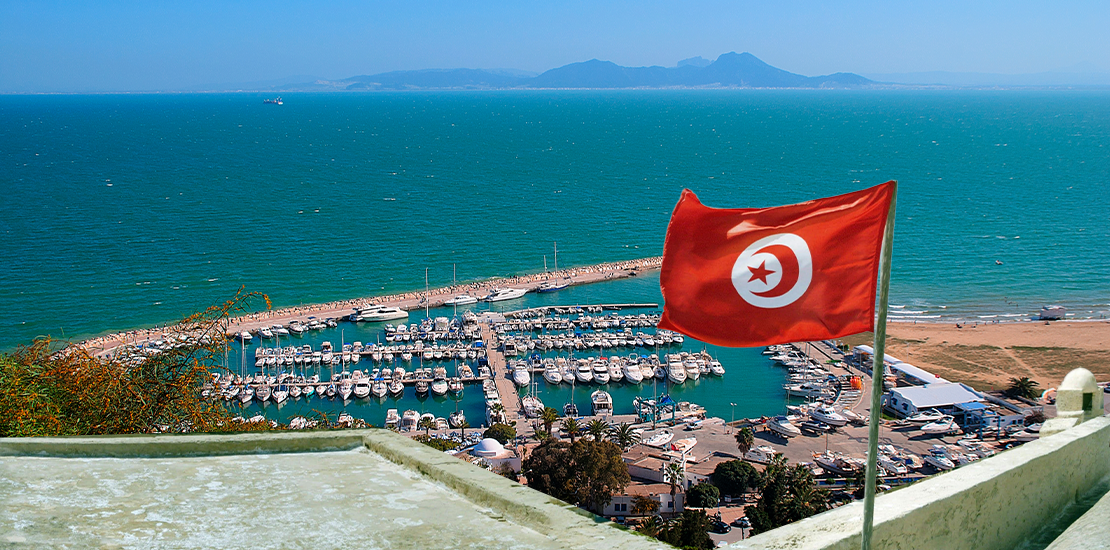
In Tunisia, port concessions have become one of the main instruments for modernizing a logistics system under strain. Almost 98% of merchandise trade passes by sea, via seven commercial ports, making port infrastructure the backbone of the country's foreign trade. The way in which operating rights for terminals, specialized quays and logistics zones are allocated and managed therefore directly conditions Tunisia's international competitiveness and its ability to control the cost of both imports and exports.
The Tunis-La Goulette-Rades complex illustrates this centrality. The port of Radès, which specializes in containers and roll-on/roll-off units, accounts for around 21% of all Tunisian port traffic and nearly 80% of containerized goods tonnage. This weight makes congestion a macro-economic issue: container dwell times remain well above European standards, with average dwell times of well over ten days, whereas the major Mediterranean hubs aim for just a few days. These delays increase logistics costs, slow down supply chains and weaken the position of Tunisian exporters in their target markets.
In response to these constraints, Tunisia launched a reform inspired by the landlord port model in the late 1990s. The Office de la Marine Marchande et des Ports (OMMP) retains ownership of the land and major infrastructure - dykes, quays, basins - as well as regulatory and long-term planning functions. The commercial operation of terminals and certain quays is entrusted by concession to public or private operators, selected through regulated procedures. These concessionaires undertake to invest in superstructure and handling equipment, in return for time-limited operating rights defined in detailed specifications.
The contracts signed at Radès provide a concrete illustration of this shift. Société tunisienne d'acconage et de manutention (STAM), a state-owned company present in most of the country's commercial ports and responsible for a large share of national tonnage, was awarded the concession for the combined container-trailer terminal in 2005. Within the same perimeter, a restricted Ministerial Council authorized OMMP to grant a 50-hectare logistics zone, designed to relieve congestion in warehousing areas, bring warehouses, customs and carriers closer to the berths, and transform a space long used as a storage yard into a fast-moving transit platform.
In addition to this main terminal, several concessions target strategic flows. The Office des céréales benefits from specialized berths for wheat and barley imports; industrialists such as STIR for petroleum products and certain cement manufacturers operate dedicated berths in various merchant ports. In these configurations, operators finance their own loading and unloading equipment, and gain priority access to the infrastructure. Similar schemes exist or are envisaged in Bizerte, Gabès, Sfax or Zarzis for oil, chemical or industrial terminals, thus structuring regional logistics chains and promoting the specialization of certain sites along the coast.
The Enfidha deepwater port project, however, is the focus of most expectations. Conceived as a large-scale maritime and logistics complex, capable of handling very large container ships and large transshipment volumes in the long term, it is to be developed according to the same owner-port principle: the OMMP will be responsible for the heavy infrastructure works, while a private operator will be awarded the container terminal and its equipment within the framework of a public-private partnership. Market studies forecast a gradual build-up, backed by a vast zone of economic and logistics activities. The recent decision to classify Enfidha as a "strategic" public project is aimed at speeding up procedures, securing financing and asserting its role in the national logistics strategy.
For the public authorities, the stakes are twofold. In the short term, the aim is to relieve congestion at Radès, whose limited productivity and use of the port as a storage rather than a transit area are regularly criticized by business circles, to reduce container dwell times and to improve the reliability of the interface with road and rail. In the medium term, the creation of a new hub at Enfidha should help rebalance the port system, capture a share of the transshipment traffic currently concentrated in a few Mediterranean hubs, and consolidate Tunisia's role as a logistics hub between Europe, Africa and the Middle East.
The rise of concessions is not, however, without its darker side. The broad outlines of the projects are known, but public information remains limited on the distribution of financial risks between the State, investors and operators, on revenue sharing and on mechanisms for revising contracts in the event of economic shocks or changes in shipping routes. In a social landscape where trade unions and port workers play a central role, the role of state-owned companies such as STAM, the pace of opening up to new operators and competition rules are fuelling an ongoing debate, focused more on implementation methods than on the principle of resorting to concessions itself.
For foreign trade, the stakes are clear. If investment in terminals, logistics zones and maritime links can reduce transit times, make chains more reliable and simplify customs procedures, the logistics costs borne by exporters can be reduced on a lasting basis, improving company margins and the competitiveness of Tunisian products. Conversely, if productivity gains remain limited, or if contracts do not provide for strong performance incentives, the additional costs of port calls and the vagaries of port passage will continue to act as an "invisible tax" on the economy. OMMP's ability to set measurable objectives, publish performance indicators and adjust concessions accordingly, where necessary, will be decisive in transforming these contracts into genuine logistical assets in the service of Tunisia's integration into major maritime routes.


 Ivory Coast
 Algeria
 FR
FR
 EN
EN