
 Ivory Coast
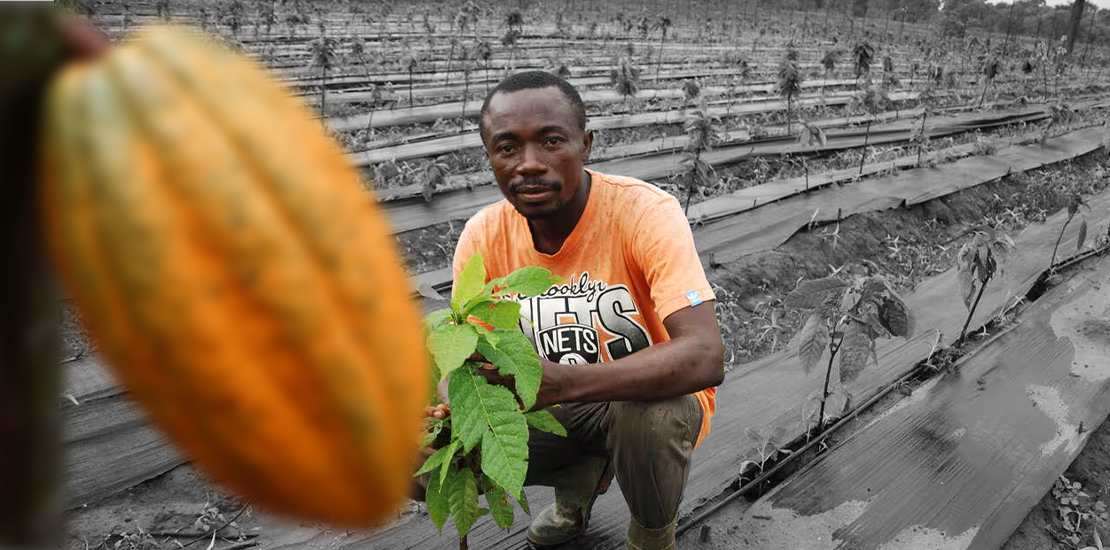
Côte d'Ivoire has become synonymous with cocoa. The country supplies nearly half of the world's production, and the sector accounts for about 40% of export earnings and nearly 15% of GDP, while providing a livelihood for hundreds of thousands of small farmers. But this pillar of the economy is now at the center of a wider battle: the European Union, the main market for Ivorian cocoa, is imposing new traceability and sustainability rules, at the risk of reshuffling the cards in an industry already under pressure.
At the center of the standoff is the European Union Deforestation Regulation (EUDR), adopted in 2023. It ultimately prohibits products such as cocoa from entering the European market if they are linked to deforestation after December 31, 2020. Importers will have to prove that the beans are "legal" in the country of origin, provide the geographical coordinates of the plots from which they originate, and demonstrate that the supply chains do not mix compliant and non-compliant beans. After heated debates with producing countries and industry, the EU agreed to postpone its timetable by one year: large and medium-sized companies will have to comply from the end of 2026, and small companies from 2027. The philosophy behind the text remains unchanged: to reduce Europe's forest footprint by making market access conditional on a high degree of traceability.
For Côte d'Ivoire, which has lost much of its forest cover in a few decades due to the expansion of cocoa and other crops, this regulation is both a constraint and a catalyst for change. The government, through the Coffee and Cocoa Council (CCC), has launched a vast project to map plantations and identify producers. Digital identity cards are distributed to farmers, linking each delivery of beans to a specific farmer, a geolocated plot of land, and a specific cooperative; payments are increasingly made electronically. At the same time, major chocolate companies have announced that they have mapped 100% of their partner farms in Côte d'Ivoire and are rolling out cocoa bags with QR codes to track the origin of beans throughout the supply chain.
The official goal is clear: to show that Ivorian cocoa can be "zero deforestation" and fully traceable. But on the ground, this modernization comes at a cost. Most producers cultivate small plots and remain vulnerable to price volatility, cocoa tree diseases, and climatic hazards. Several studies highlight that, despite increases in the guaranteed farm price and initiatives aimed at ensuring a "living income," the majority of farmers remain below the threshold for a decent income. At the same time, production costs are rising, particularly with the precise updating of acreage and compliance requirements.
For cooperatives, the regulatory hurdle is particularly high. New obligations (GPS data collection, information systems, audits, dedicated compliance staff) represent a heavy investment. Estimates put the cost of EUDR compliance at around $100 per ton, or even more for smaller structures, a level that is likely to significantly erode already narrow margins. Some cooperatives fear being excluded from the supply chains of large buyers in favor of a few better-capitalized players. One official quoted in the press sums up this fear: compliance has become "an entry ticket that not everyone can afford."
These regulatory tensions add to another, older standoff over value sharing. In 2019, Côte d'Ivoire and Ghana introduced a "Living Income Differential" (LID) of $400 per ton on all cocoa sales, a s presented as a tool to sustainably raise producers' incomes. While the industry has officially accepted this mechanism, several analyses show that some buyers have, at the same time, reduced other premiums traditionally paid to West African origins, limiting the net effect of the LID. In this context, the EUDR is perceived by West Africa as a new instrument of power: by unilaterally setting the conditions for access to its market, the EU is strengthening its ability to dictate not only the implicit price of compliance, but also the environmental and social standards of the sector.
Brussels is promoting a "partnership" with producing countries, illustrated by joint programs on sustainable cocoa and the mobilization of more than €200 million to support mapping, forest governance, and national policy support. Cooperatives in Côte d'Ivoire are benefiting from these funds to train "sustainability coaches," reforest certain areas, and strengthen monitoring of child labor. However, many local actors believe that support remains below what is needed and that most of the financial risk continues to be borne by Ivorian producers and intermediaries. In the background, market conditions are tightening: harvests are being affected by aging plantations and climate change, and the authorities have had to raise the guaranteed farm price significantly, while Côte d'Ivoire is limiting its export sales to take account of a structural decline in production.
Ultimately, traceability is not just a technical tool; it is reshaping the balance of power in an industry estimated to be worth more than $100 billion worldwide. For Côte d'Ivoire, the path is narrow: compliance with the EUDR is accelerating essential modernization—digitization of flows, professionalization of cooperatives, better knowledge of plantations—but it also risks pushing those who cannot keep up, foremost among them smallholders, out of the European market. The question that now arises, beyond the case of Côte d'Ivoire alone, is who will set the rules of the game: producer countries, which seek to capture a greater share of the value, or consumer countries, which impose their standards in the name of combating deforestation. Between these two poles, Ivorian cocoa finds itself both as a testing ground for new sustainability policies and as a full-scale test of the ability of global value chains to reconcile social justice, competitiveness, and environmental requirements.

 Algeria
 Democratic Republic of Congo

 Nigeria
 FR
FR
 EN
EN