
 Algeria
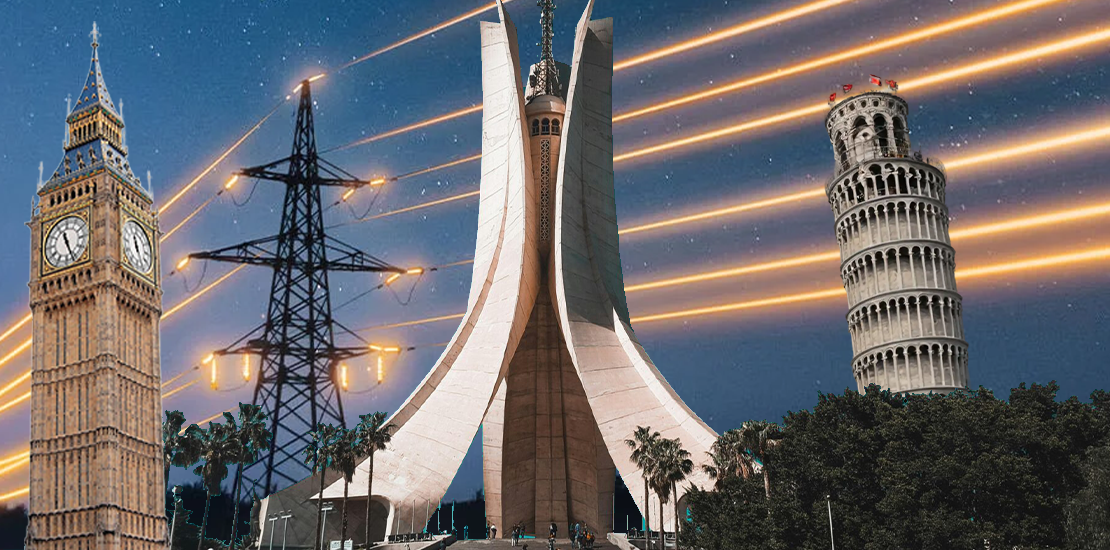
Since 2022, the energy relationship between Europe and Algeria has entered a phase of rapid restructuring, revealing the tensions and profound transformations in the international energy system. The sudden break with Russian gas has forced the European Union to urgently rethink its dependencies, supply routes, and strategic priorities. In this context, Algiers has seen its role rapidly strengthen, not only as a credible alternative supplier, but also as a local partner capable of offering a form of energy continuity. However, this rise in power has been accompanied by a major strategic shift on the Algerian side: the objective is no longer to remain confined to the status of a simple gas exporter, but to be part of the European energy transition, in particular through the development of low-carbon hydrogen. The crux of the matter therefore lies in a twofold trade-off: how can Algeria transform its renewed importance in the gas market into sustainable strategic capital, and how can Europe reconcile immediate energy security with long-term climate objectives?
The foundations of this renewed relationship are primarily infrastructural. Algeria has a rare advantage in the Euro-Mediterranean region: operational gas pipelines directly connecting its territory to two major European markets (Italy via TransMed and Spain via Medgaz). This configuration allows it to deliver a significant portion of its volumes without being entirely dependent on the global LNG market, which is characterized by high price volatility and destination uncertainty. For many European capitals, this geographical proximity has immediate geopolitical value: it shortens supply chains and enhances contractual predictability. For Algiers, this anchorage remains vital from a macroeconomic perspective, as hydrocarbons are still the main source of foreign exchange.
In this dynamic, Italy has established itself as the key partner. Since 2022, Rome and Algiers have multiplied agreements aimed at increasing flows via TransMed, mobilizing existing capacities and accelerating certain upstream projects. Italy's message has been consistent: to secure stable volumes for industry and households, while affirming its ambition to make Italy a European energy hub, a point of entry and redistribution to the rest of the continent. For Algeria, this relationship serves a complementary purpose: to consolidate a major customer, attract structural investments, and establish long-term cooperation. Energy thus becomes a central diplomatic vector, serving both as an economic guarantee and a foundation for an expanded Mediterranean relationship.
However, the originality of the Italian-Algerian partnership lies in its forward-looking dimension. Gradually, the discussion has moved beyond gas volumes to issues related to the compatibility of infrastructure with the energy transition. This includes reducing production-related emissions, combating methane leaks, modernizing facilities, and also considering the future use of existing corridors. In several European scenarios, some gas pipelines could eventually transport carbon-free mixtures or facilitate the transport of hydrogen-derived molecules, such as ammonia. For Algiers, the challenge is to transform gas assets into gateways to new markets, rather than suffer a gradual devaluation of its infrastructure. For Europe, the potential benefit is to reduce the logistical costs of the hydrogen economy by capitalizing on already established routes.
The relationship with Spain is more complex. It combines physical interdependence with Spain's desire for greater diversification. The closure of the Maghreb-Europe gas pipeline at the end of 2021 has further concentrated flows on Medgaz and LNG, reinforcing the risk management logic of the Iberian system. Madrid has significant regasification capacity and flexible access to the global LNG market, allowing it to arbitrate between different sources based on prices, contractual constraints, and political considerations. This flexibility has sometimes reduced Algeria's relative share of Spanish imports, without undermining the underlying relationship. The tariff renegotiations that took place during the price surge mainly revealed a structural reality: the relationship may become strained, but it remains within a robust commercial framework as long as a minimum level of mutual stability is maintained.
Germany, for its part, embodies the long-term strategic aspect: hydrogen as a pillar of industrial decarbonization. Berlin is aiming for a profound transformation of its productive apparatus, particularly in steel, chemicals, and synthetic fuels, and anticipates a structural dependence on hydrogen imports. Lacking sufficient space and resources to produce all the necessary volumes on its own territory, Germany is seeking to diversify its partnerships. This is the context for the bilateral mechanisms with Algeria: working groups, pilot projects, discussions on logistics corridors and on financial and regulatory frameworks. For Algiers, the aim is to enter a high value-added market early on. For Berlin, the aim is to avoid repeating the mistake of excessive dependence on a limited number of suppliers.
Algeria's hydrogen roadmap is based on undeniable strengths: considerable solar potential, recognized energy expertise, and close proximity to the European market. It favors a dual approach, combining green hydrogen produced by electrolysis from renewables and blue hydrogen from gas with CO₂ capture and storage. But this ambition faces major structural constraints. Algeria's electricity mix remains dominated by gas, requiring the development of additional renewable capacity to avoid competition with domestic demand. Water scarcity is another material constraint, as electrolysis requires desalination and cost frastructure. Finally, the logistical choices (pure hydrogen, ammonia, e-fuels) each involve significant industrial and port investments.
In addition to these technical challenges, there is also a regulatory dimension. The European Union is increasingly strict in its definition of "low-carbon" hydrogen, with requirements for traceability, calculation of emissions throughout the chain, and environmental compliance. The energy relationship is thus becoming a relationship of standards. For Algeria, this means building solid certification and industrial governance capabilities. For Europe, it implies a constant balancing act between climate ambition, economic cost, and security of supply.
Ultimately, the energy partnership between Europe and Algeria is at a turning point. Still largely structured around gas, it is already being shaped by hydrogen as a strategic promise. Relations with Italy, Spain, and Germany are following a gradual trajectory: securing the short term, adapting infrastructure, and preparing for the post-gas era. For Europe, Algeria is a key test of an orderly energy transition at its borders. For Algeria, it is an opportunity to transform its historical role as a supplier into the more demanding role of a partner in sustainable decarbonization.
 Ivory Coast
 Democratic Republic of Congo
 FR
FR
 EN
EN