
 Democratic Republic of Congo
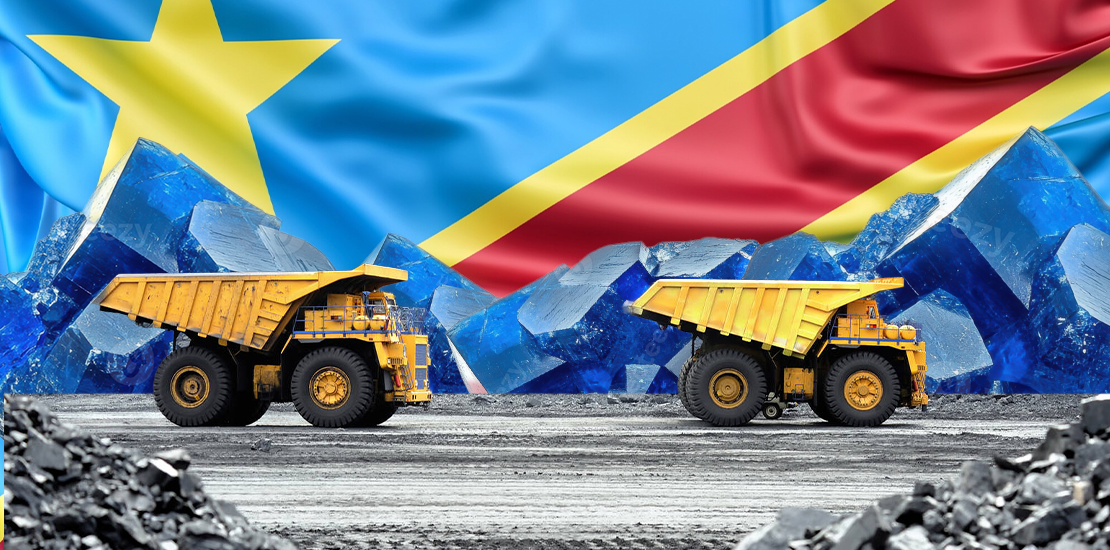
In 2025, the Democratic Republic of Congo (DRC) halted all cobalt exports for several months before introducing a system of annual quotas with a 10% royalty on each shipment. Officially, the aim was to halt the collapse of prices and regain control of a sector considered strategic. In reality, this decision immediately put pressure on the global market and served as a reminder that the energy transition relies, to a large extent, on the mineral resources of a single country. It also revealed the intensity of the rivalry between China, the United States, and Europe to secure access to this metal, which has become indispensable.
Cobalt is a critical metal used in many lithium-ion battery chemistries for electric vehicles, stationary storage, and certain electronic equipment. The DRC supplies more than 70% of global mining production, according to the latest data from specialized organizations, or well over 200,000 tons out of approximately 250,000 tons produced in 2024. In this context, the slightest disruption in the Katanga copper belt results in price increases and a revision of the industrial plans of major manufacturers.
This central role is based on a contractual framework established in the early 2000s. The mining code, revised in 2018, increases taxes on "strategic substances" and requires the state, via Gécamines, to have a stake in mining joint ventures. The main copper-cobalt deposits are exploited by joint ventures involving Gécamines, Glencore, China's CMOC, Ivanhoe, and other groups. Among the most emblematic agreements is the "minerals for infrastructure" contract signed with the Sicomines consortium, which exchanges access to deposits for infrastructure construction. At the same time, a highly dense artisanal sector employs hundreds of thousands of miners, often in precarious conditions in terms of safety and income.
Beijing occupies a dominant position in this complex landscape. Recent studies estimate that Chinese groups control around 70% of the DRC's copper and cobalt mines, even though the country accounts for most of the world's cobalt production. Almost all of the hydroxide produced in southern Congo is exported to Chinese refineries, which then supply cathode materials to the global battery industry. This dual control, upstream over deposits and downstream over refining, gives China significant leverage over a key link in the energy transition value chains. It is reinforced by long-term contracts between Chinese companies, Gécamines, and the Congolese authorities.
Faced with this lead, the United States is attempting to reconfigure the flows. The Inflation Reduction Act now makes subsidies for electric vehicles conditional on an increasing share of the value of critical minerals being extracted or processed in the United States or in partner countries. In this context, the DRC remains indispensable for cobalt, but Washington intends to reduce its dependence on chains dominated by China. The United States is therefore supporting the rehabilitation of the Lobito railway corridor, which will link mines in southern Congo to the Angolan port of the same name and provide an alternative export route to the Atlantic.
This strategy also relies on financial tools. The DFC, the investment arm of the US government, has declared its readiness to support a new joint venture between Gécamines and the Swiss trading company Mercuria, which will be responsible for marketing part of the Congolese copper and cobalt. The agreement provides that certain US buyers will have preferential rights to these volumes in exchange for financial support for logistics and energy infrastructure.
The European Union is taking a more regulatory but equally strategic approach. The Critical Raw Materials Act, in force since 2024, establishes a key principle: no strategic raw material should depend on a single third country for more than 65% of its supply. It also requires the development of refining and recycling capacities on European territory, without eliminating the need for massive imports. In this context, the DRC has been identified as a priority partner for cobalt, as part of a broader policy of diversifying supply chains.
Global Gateway, the EU's major infrastructure initiative, is also co-financing the Lobito corridor with the United States and several development banks. The official goal is to secure a more reliable export route for copper and cobalt in exchange for commitments on traceability, the environment, and human rights. However, NGOs have warned of the risk of forced displacement of thousands of people along the line in a region where land ownership remains largely informal.
For the DRC, this rivalry offers both an opportunity and a risk. The new architecture of quotas, royalties, and strategic reserves aims to transform the world's dependence on Congolese cobalt into a lever of sovereignty by strengthening Gécamines' role in marketing and formalizing artisanal production. But the embargo and subsequent transition to quotas have weighed on the cash flow of several operators and fueled a climate of regulatory uncertainty. In the longer term, the rise of Indonesia and the development of recycling and battery technologies that use less cobalt could reduce the DRC's market power if governance of the sector, contract transparency, and rent redistribution do not improve.
At the crossroads of Chinese, American, and European strategies, Congolese cobalt is thus at the heart of the challenges of energy transition and state sovereignty. Kinshasa still has a window of opportunity to negotiate better terms, but it is limited in time. How it is used will largely determine
 Ivory Coast

 Algeria
 FR
FR
 EN
EN