
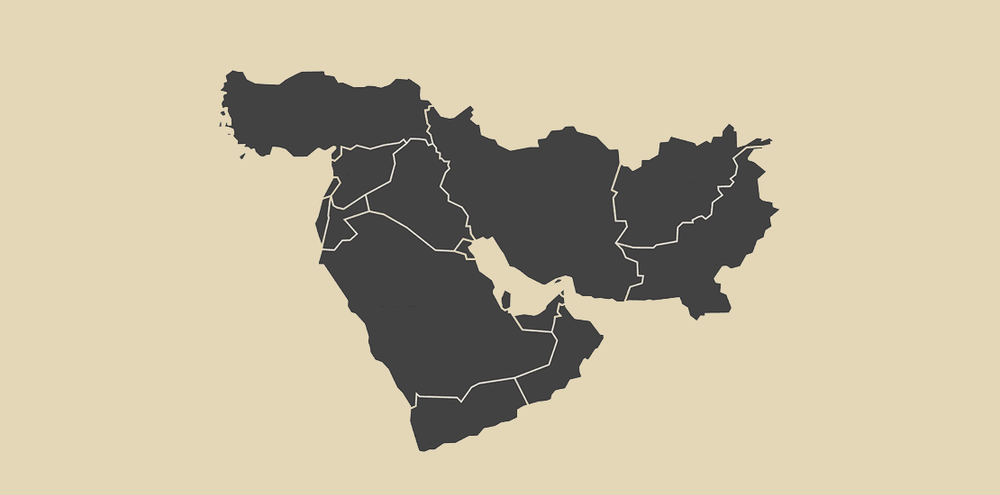
From the Horn of Africa to the Atlantic seaboard, the Gulf states - the United Arab Emirates, Qatar and Saudi Arabia - have refined a grammar of influence in which religious philanthropy, donations and investments are mutually supportive. In this strategy, the mosque, the port and humanitarian aid form complementary levers that open political doors and structure economic dependencies. It relies on public operators (sovereign wealth funds, port groups, development agencies) and an archipelago of faith-based NGOs financing schools, clinics and wells. This ideological and material soft power can be seen above all in three areas: the Horn, the Sahel and West Africa.
In the Horn, the Emirati approach combines infrastructure and political leverage. In Berbera, Somaliland, DP World is modernizing the terminal and co-financing the road corridor to Ethiopia with the support of funds from Abu Dhabi, offering Addis Ababa an alternative to Djibouti. The January 1st, 2024, memorandum between Ethiopia and Somaliland on maritime access reinforced this strategic shift. Although Abu Dhabi dismantled its Assab base in Eritrea in 2021, the logic remains the same: to control port-corridor links in a key area of the East-West routes.
Qatar favors diplomacy and philanthropy. Doha cultivates a reputation as an honest broker (from the Doha agreement for Darfur (2011) to recent efforts around the DRC) and converts this capital into political access. At the same time, Qatar Charity is weaving a social web: "multi-service" centers in Mali, and the inauguration of mosques and Koranic study centers in Ghana and Senegal in 2025. This network of "mosques-plus" generates local recognition and intermediation channels with the authorities.
Riyadh combines the tool of aid with the logic of assets. Saudi Arabia is the Gulf's main donor of recent public aid, via the Saudi Fund for Development and the KSrelief humanitarian center, which have a strong presence in Africa. But the Kingdom is also advancing its economic interests: in 2025, SALIC, the agri-food arm of the state fund, took control of Olam Agri, a major grain and oilseed trader. The aim is to secure supply chains and gain a foothold in food markets, where logistics create influence.
The focus is on three zones. Firstly, the Horn of Africa, which controls Bab el-Mandeb and the Gulf of Aden: ports, free-trade zones and customs facilities have become privileged locations for concessions and access. Then there's the Sahel, where the collapse of public services has turned religious donations into a social shock absorber and a vector of influence on Islamic hierarchies and curricula. Finally, West Africa, where maritime routes, large domestic markets and rapid digital transitions attract logistics capital, payment platforms and agribusiness.
The case of Senegal illustrates the "political ports" method. In Ndayane, DP World is building a $1.2 billion deepwater port, designed as a transshipment and industrial hub. For Dakar, the benefits are tangible: jobs, revenues and an upmarket logistics offer. For Dubai, the challenge is to establish a network of terminals that, from the Red Sea to the Atlantic, carries weight in regulatory and commercial negotiations. At the same time, the Qatari sovereign wealth fund's entry into Airtel Africa's mobile finance business underlines its interest in the payment infrastructures that now structure economic life in West Africa.
In the Sahel, religious philanthropy is the first stage of the rocket. Gulf-based NGOs finance mosques, Koranic schools, boreholes and seasonal campaigns (Ramadan, Eid), compensating for social state deficits while anchoring preaching networks. At the same time, security serves as a backdrop: the Emirates have intensified their cooperation with Chad from 2023, against the backdrop of the spillover of the Sudanese conflict. UN investigations and media revelations have also accused Abu Dhabi of using Chadian airstrips to supply the paramilitary RSF force; the Emirates deny this, claiming to be carrying out humanitarian operations. This humanitarian-security blurring shows the extent to which the donation tool is interwoven with regional rivalries.
Beyond the individual cases, a common mechanism emerges. Firstly, the density of social interventions creates a base of legitimacy and access with local authorities, nurtured by a narrative of pan-Islamic "brotherhood" or South-South solidarity. Secondly, taking control of critical assets - ports, economic zones, payment platforms, agricultural traders - gives discreet but lasting negotiating power over public decisions. Finally, mediation diplomacy, particularly Qatari, serves as a symbolic bargaining chip during crises. This triptych converts charity into influence and infrastructure into political leverage.
The risks have been identified: unbalanced contracts, debt backed by port revenues, porosity between humanitarian and security concerns, doctrinal divides and rivalries between Gulf sponsors. Africa's room for maneuver lies in the transparency of agreements (local content, risk-sharing, reversibility clauses), the plurality of partners and the ability of states to direct religious donations towards education and health objectives compatible with their national policies.
In short, the Gulf's soft power in Africa is anything but vaporous: it is structured, equipped and territorial. Its political economy is based on a simple alchemy: generosity as the gateway, investment as the backbone, diplomacy as the binder. For African capitals, the challenge is not to "choose sides", but to codify the rules of the game that maximize public benefits and minimize capture effects. In this way, mosques, donations and ports can become catalysts for industrialization, connectivity and inclusion in the service of African priorities.
 Algeria
 Democratic Republic of Congo
 FR
FR
 EN
EN