
 Cameroun
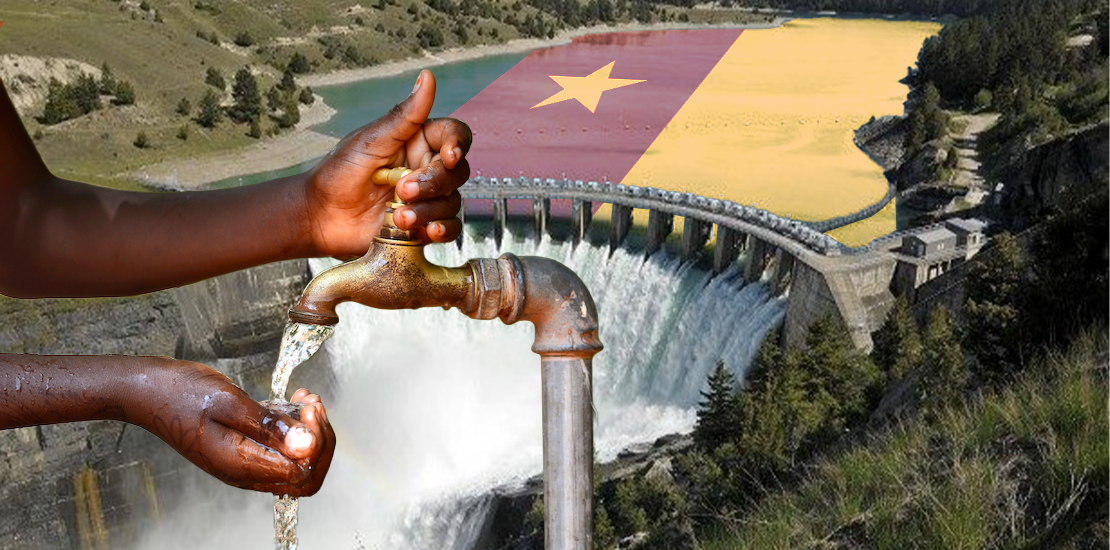
For more than fifteen years, Cameroon has had high ambitions for drinking water in rural areas. Vision 2025, the National Water Policy and the National Development Strategy 2020-2030 (SND30) promise rural coverage of 75%, rising to 85% by 2030. On paper, village hydraulics programs follow one another, supported by the State and donors. But between the sums announced in the finance acts and the reality in the villages, there is a space made up of delays, broken-down boreholes and projects that never materialize.
The plans adopted since the late 2000s called for the creation of thousands of new water points and the rehabilitation of existing structures. However, a 2010 national study put access to drinking water at less than 30% in rural areas, compared with around 75% in urban areas. More recently, UNICEF estimates that around 70% of the Cameroonian population has access to a water source deemed safe, but only just over half of rural dwellers. The Sahelian regions of Nord, Extrême-Nord and Adamaoua lag far behind, fuelling local tensions over functional water points.
In terms of funding, the State's efforts have long been limited. In the mid-2000s, the national budget allocated some 15 billion CFA francs a year to the water sector, i.e. less than 1% of public spending. However, a national study estimated the cumulative investment needs for water and sanitation at over 500 billion CFA francs over a decade, far in excess of the funds available. In reality, rural water supply relies heavily on external aid: the African Development Bank, bilateral cooperation, UN agencies and NGOs finance a large proportion of boreholes, mini-adductions and latrines in rural areas.
This dependence is confirmed today. In 2025, the World Bank has approved a $950 million Water Security Program, including $200 million for a first phase combining institutional strengthening and investment in several rural regions. The African Development Bank is financing national inventories and feasibility studies for village mini-networks, as well as training technical services. These external resources are supplemented by the decentralization endowment and public investment credits, in a dense but fragmented financial landscape where it is difficult to trace the precise route taken by each franc.
A study of the traceability of public expenditure (PETS 3, water-hygiene-sanitation section) sheds light on what happens to these budgets. From an accounting point of view, the picture is flattering: the execution rate for WASH projects exceeds 95% on both a commitment and an authorization basis. But analysis shows that the money committed does not always translate into operational works. In 2017, around a quarter of the rural drinking water supply projects committed had not started, concentrating a significant proportion of the corresponding amounts. Most projects start and finish late, often by several weeks, while commitment files remain with financial controllers for an average of more than ten days, compared with the regulatory deadline of 72 hours. As a result, a project included in the Finance Act may not appear in the village until two or three years later, or even remain at the stage of unfinished works, fuelling the impression of "ghost sites" despite budgets that have officially been consumed.
When works do exist, their durability is far from assured. A recent review of data from 310 communal plans estimates that over 20,000 human-driven pumps are the main source of drinking water in rural areas. A third of these are said to be non-functional, representing some 6,700 immobilized water points, the theoretical equivalent of several million people deprived of service. The authors estimate that several tens of billions of CFA francs are tied up in investment in these broken-down facilities, not to mention the health costs associated with the return to rivers, marigots or unprotected wells.
Local studies give flesh to these statistics. In the Far North, several field surveys show that around half of the boreholes equipped with hand pumps are at standstill, and that some of those that are working only deliver water for a fraction of the year. Further south, a study carried out in the forest commune of Mvangan identified 127 modern water points, but noted the absence of a management committee for nearly four out of ten structures, the lack of a maintenance budget line and the difficulty of existing committees to finance repairs beyond the first few years. The authors point out that this type of fragility is common in Cameroonian communes, where powers have often been transferred without the corresponding resources.
Financial jurisdictions and technical partners agree on one diagnosis: it's not enough to mobilize more funds, we need to move from a project-based approach to a public rural water service. The audits revealed inadequate coordination between ministries, local authorities and donors, incomplete data on the condition of facilities, and infrequent post-construction monitoring. The new water security programs call for national databases, local capacity-building and stricter maintenance rules. Their success will be judged less by the sums involved than by a simple question asked every dry season in the villages: when you turn on the pump, is the water still flowing?

 Algeria

 Democratic Republic of Congo
 FR
FR
 EN
EN