
 Morocco
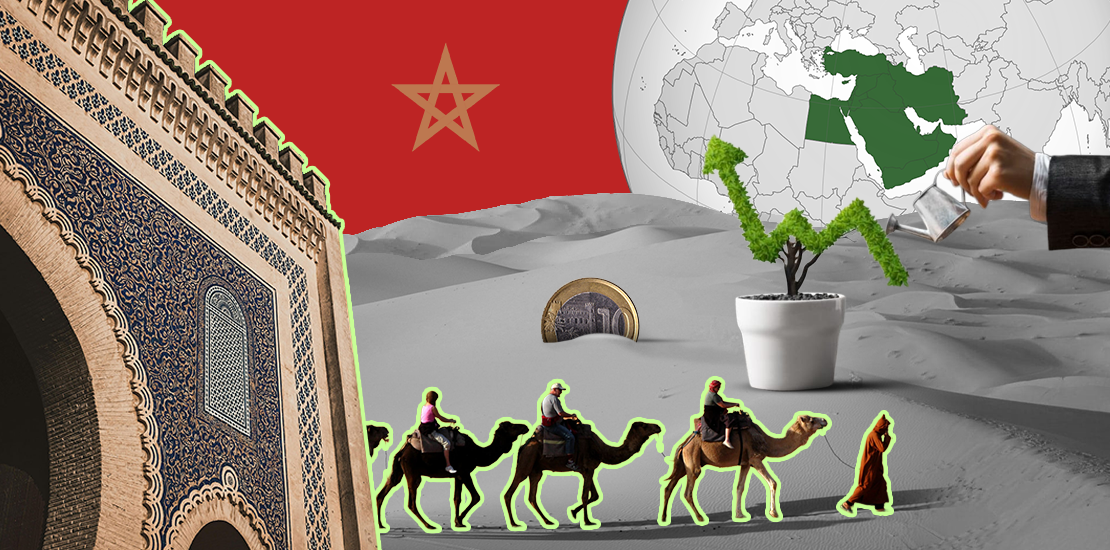
On paper, Morocco appears to be on an enviable trajectory, with foreign direct investment surging in 2024. Behind this momentum lies a player that has become central but is rarely mentioned in public debate: the Gulf monarchies, mainly the United Arab Emirates, Saudi Arabia, and Qatar, whose capital now flows into key sectors of the Moroccan economy.
In 2024, the Emirates rose to become the leading foreign investor in Morocco, accounting for nearly 19% of total net FDI flows and injecting around 3.1 billion dirhams out of a total of just over 16 billion. Most of this capital is concentrated in real estate and manufacturing, which account for more than 90% of FDI that year. Gulf funds are no longer limited to symbolic operations: they are at the heart of the country's productive transformation.
This movement is based on a political framework established in the early 2010s. A strategic partnership between Morocco and the GCC was launched in 2011, accompanied by a multi-billion dollar fund for infrastructure and development. In the same year, Wessal Capital was created: this €2.5 billion investment vehicle brings together sovereign wealth funds from the UAE, Qatar, Kuwait, and Morocco to finance major urban and tourism projects.
The United Arab Emirates currently has the most structured relationship. It is present in telecoms via e& (formerly Etisalat), the controlling shareholder of the incumbent operator Maroc Telecom, as well as in real estate and financial services. In the energy sector, their groups are involved in electricity generation and desalination projects, strengthening their position on essential assets and contributing to investment programs worth tens of billions of dirhams by 2030.
Saudi Arabia plays a pivotal role in the energy transition. The ACWA Power group is a key player in the Noor solar complex in Ouarzazate and is developing new solar capacity in Midelt, as well as wind farms in the north of the country. More recently, it won the Noor Midelt 2 and 3 projects, which combine solar production and storage, consolidating Riyadh's place in Morocco's decarbonization strategy. In addition to these energy investments, there are tourism projects (hotels, resorts, seaside resorts) led by large Saudi private groups.
Qatar is taking a more targeted but significant approach. In 2011, a joint $2 billion fund was set up to support Moroccan tourism. Adding to this institutional layer is the offensive by Kasada Capital Management, a hotel platform supported by the Qatar Investment Authority and Accor. Kasada is preparing its first operations in Morocco starting in 2026, with a dedicated fund to finance the acquisition, renovation, and construction of hotels in major tourist cities ahead of the 2030 World Cup, which the Kingdom will co-host.
For Rabat, the economic benefits are clear. Capital from the Gulf has made it possible to accelerate projects that would have been more difficult to finance with domestic resources: transforming port and riverfronts into mixed-use areas, deploying a greener electricity mix, and upgrading the tourism offering. They also strengthen Morocco's ability to present itself as an African platform for groups seeking access to West Africa, capitalizing on the port, airport, and logistics infrastructure already in place.
However, these advantages come with some subtle dependencies. The first dependency is financial: in some years, a single Gulf economy, the United Arab Emirates, accounts for nearly a fifth of net FDI flows to Morocco. A shift in Abu Dhabi's investment strategy, or a shock to the oil economies, could affect the pace of several structural projects and highlight the concentration of funding sources.
The second dependency is sectoral: the presence of e& in telecoms, ACWA Power in renewables, Gulf funds in platforms such as Wessal Capital, and future funds dedicated to the hotel industry gives the Gulf monarchies a lasting role in critical infrastructure. Decisions taken in Riyadh, Doha, or Abu Dhabi can indirectly affect key sectors of the Moroccan economy, even though Rabat retains regulatory leverage and remains a co- shareholder in several of these projects.
The third dependency is diplomatic: by systematically supporting Morocco's position on the Sahara issue in regional and international forums, the Gulf countries offer Rabat valuable support. Recent communiqués from the Gulf Cooperation Council explicitly reaffirm Morocco's sovereignty over the Sahara and the importance of the autonomy plan supported by the Kingdom. In return, Morocco is encouraged to align itself with certain Gulf priorities, whether in relation to Middle East issues, energy security, or major economic initiatives.
Finally, these massive flows raise questions about the nature of the development they produce. Some of the investments are concentrated in real estate, large tourist complexes, and capital-intensive energy infrastructure, which do not create many direct jobs. The challenge for the Moroccan authorities is therefore to ensure that this capital is aligned with policies aimed at upgrading industry, supporting SMEs, and promoting balanced regional development.
As Morocco prepares to host the 2030 World Cup, develop new ports and rail lines, and strengthen its role as an African hub, Gulf capital will remain a major lever. The strategic challenge is no longer to attract it, but to structure a framework of governance, transparency, and diversification of partners that transforms these massive investments into a driver of economic sovereignty rather than a source of dependencies that are difficult to sustain in the long term.
 Ivory Coast
 Algeria
 FR
FR
 EN
EN