
 Kenya
Kenya
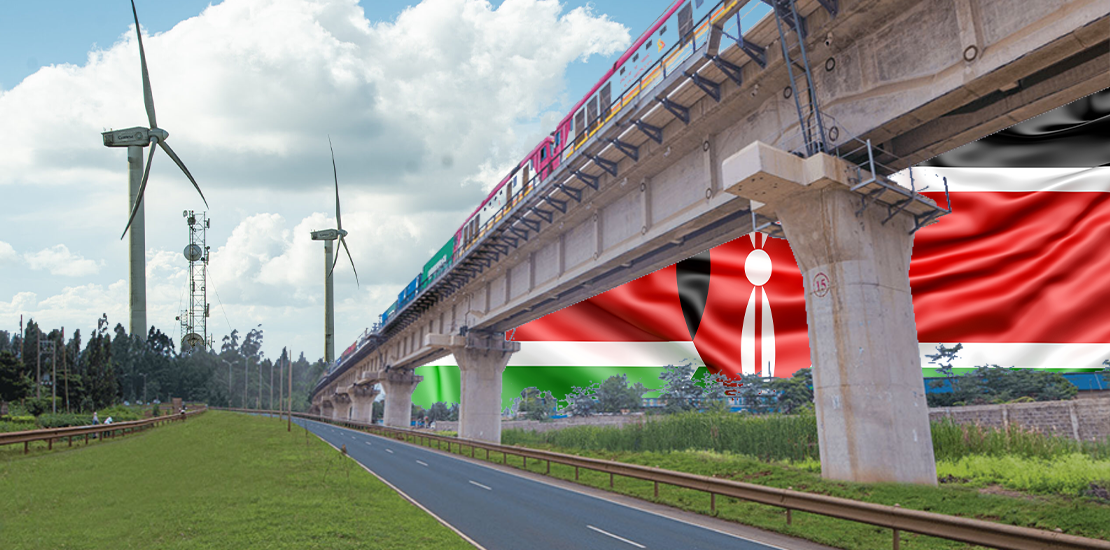
Over the past decade, Kenya has made public-private partnerships (PPPs) a cornerstone of its infrastructure development strategy, against a backdrop of high public debt and massive transport and health needs. The 2013 law, and above all the Public Private Partnerships Act of 2021, have given the country a dedicated framework, with a PPP Directorate and a Committee responsible for validating projects and feasibility studies.
For the authorities, the objective is clear: to finance structuring assets without immediately burdening the budget, by sharing financing, construction, and operation with private operators. But audit and evaluation reports show that, while these schemes can be effective, they also generate new forms of budgetary and political risk, sometimes difficult for decision-makers to grasp.
Toll freeways: visible gains, offset risks
The Nairobi Expressway illustrates the potential and limits of road PPPs. This 27- kilometer-long toll expressway links the airport to Westlands, reducing journey times from almost two hours to around 20 minutes for some 50,000 to 70,000 vehicles a day, according to official estimates.
The Design-Build-Finance-Operate-Transfer arrangement entrusts the private concessionaire with financing and operation for a period of around 27 to 30 years, before transfer to the State. In theory, the traffic risk is borne by the operator. But recent financial data show that, despite rising toll revenues, the operator is still recording net losses , as revenues do not fully cover debt servicing and operating costs.
For public authorities, the issue is no longer simply to keep traffic flowing, but to control implicit commitments: tariff adjustment mechanisms, the possibility of extending the concession, and any minimum revenue guarantees. Too rapid an increase in tolls will weigh heavily on households and businesses; too moderate an increase may trigger demands for compensation from the concessionaire. Without contractual transparency, the trade-off between investment attractiveness and social acceptability becomes difficult to manage.
Standard Gauge Railway: a megaproject weighing on the balance sheet
The Standard Gauge Railway (SGR) between Mombasa and Naivasha is not part of the same legal scheme: it was financed by loans of around $5 billion from the Exim Bank of China, repayable over several decades, and built by a Chinese state-owned company.
However, this mega-project shares several characteristics with PPPs: optimistic traffic forecasts, uncertain revenue trajectories, and long-term commitments that are difficult to renegotiate. Recent reports indicate that freight and passenger revenues do not fully cover repayment obligations, leading to cash flow pressures and, at certain times, late payments on debt maturities.
For budget managers and investors alike, the stakes are twofold. On the one hand, the State's ability to honor its commitments on such heavy assets determines its future access to markets and concessional financing. On the other hand, the priority given to these projects absorbs a significant share of budgetary space, leaving less margin for maintenance of the secondary road network, energy or social infrastructure.
Hospital projects: when operational performance becomes key
In the healthcare sector, the Managed Equipment Services (MES) program illustrates service-oriented PPPs. Launched in 2015, it is based on the supply and maintenance of medical equipment (imaging, dialysis, intensive care) in nearly a hundred public hospitals, via seven-year lease contracts financed by annual budget rents.
Conceptually, the scheme aims to avoid massive initial investment and guarantee regular maintenance, while speeding up the modernization of healthcare provision. But work by the Auditor-General, the Senate, and several Kenyan think tanks has identified weaknesses : incomplete contractual documentation, lack of visibility on cost structure, difficulties in linking payments and actual equipment performance.
Above all, the standardization of supply has not always been aligned with local capabilities. Audits report under-utilized equipment due to a lack of trained staff, consumables, or basic infrastructure (electricity, suitable premises), even though rents are due in full. For counties, this means inflexible spending, squeezing budgets available for other health priorities.
What the audits reveal: governance, risk, and capacity
The audit and evaluation reports converge on a number of key lessons for the governance of megaprojects.
- 1. Project preparation
In some cases, feasibility studies do not sufficiently document demand assumptions, operating costs, or institutional constraints. This complicates the assessment of "value for money" and increases the likelihood of subsequent renegotiation. - 2. Managing off-balance sheet commitments
PPPs can shift some of the budgetary risk into guarantees, minimum revenue clauses, or asset buy-back obligations. The PPP Act 2021 provides for more systematic monitoring of these commitments, but their operational integration into medium-term budget programming remains a work in progress. For a business manager, this means that a project appraisal can no longer be limited to the initial cost alone: all contractual obligations, explicit and implicit, must be analyzed. - 3. Contract management skills
The increasing sophistication of contracts (performance indicators, indexation mechanisms, risk matrices) requires advanced skills on the public side. However, these skills remain unevenly distributed between ministries and agencies. Monitoring performance, managing disputes, and adjusting services call for multidisciplinary, stable, and well-equipped teams.
Towards a more disciplined "second generation" of PPPs
The Kenyan experience does not call for the abandonment of PPPs, but for a change of scale in the discipline of preparation, negotiation, and monitoring. For both government and investors:
- • Project selection must incorporate rigorous tests of debt sustainability, budgetary impact, and alignment with national and county priorities.
- • Transparency is becoming a strategic asset for building market and public confidence;
- • Performance measurement, particularly in social sectors such as healthcare, needs to link payments and results more clearly, integrating local capabilities.
Under these conditions, PPPs can continue to play a central role in financing freeways, rail corridors, and hospital infrastructure, while limiting the accumulation of hidden risks. The real test will be how Kenya learns from recent audits to design the next wave of megaprojects: less spectacular politically, but more robust economically and fiscally.

 Algeria

 Democratic Republic of Congo
 FR
FR
 EN
EN