
 Egypt
Egypt
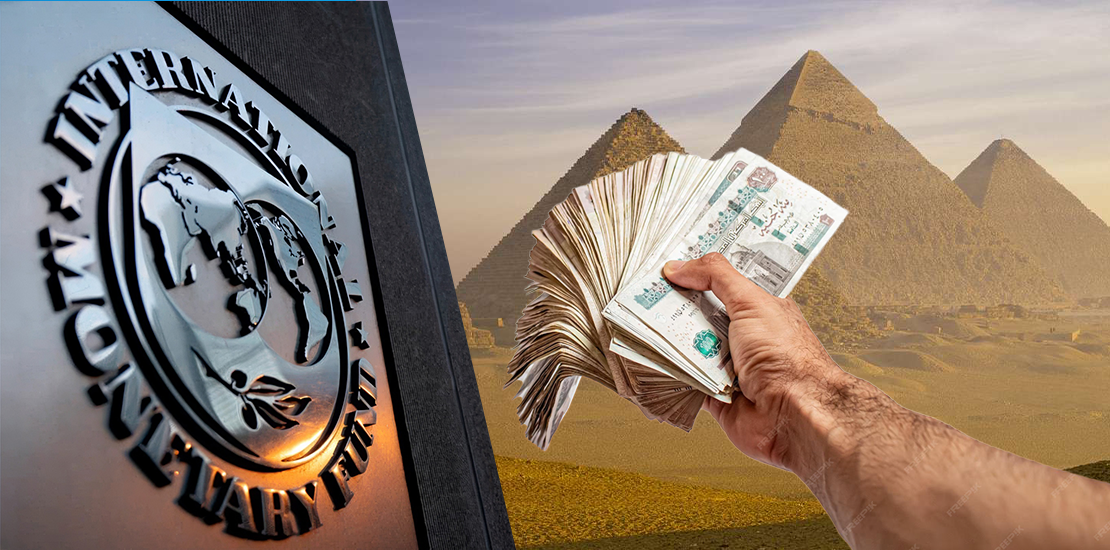
Since 2016, the Egyptian economy has been closely linked to the programs of the International Monetary Fund (IMF). Successive agreements, accompanied by sometimes painful reforms, have made it possible to avoid repeated balance of payments crises, but at the cost of growing dependence on international donors. Egypt's recent trajectory illustrates the classic dilemma between macroeconomic stabilization, internal political constraints, and high social costs.
In 2016, the IMF approved a three-year, $12 billion Extended Fund Facility (EFF) to support a program of "comprehensive reforms": exchange rate liberalization, subsidy reduction, and fiscal consolidation. In 2020, the pandemic led to emergency financing, followed by a stand-by agreement to stabilize public finances. In 2022, a new 46-month EFF of approximately $3 billion, later increased to $8 billion, was approved to address exchange rate pressures and capital outflows.
These successive programs fit together: each major crisis (external shock, Covid-19, rise in global interest rates) results in a renegotiation of commitments, but rarely in a questioning of the overall framework.
The IMF's conditionalities focus on three areas. The first is exchange rate flexibility: the depreciation of the Egyptian pound, which began in 2016 and intensified after 2022, aims to reduce foreign currency shortages and restore competitiveness. The second is fiscal discipline: introduction of VAT, gradual reduction of energy subsidies, control of the public wage bill, and a primary surplus target to stabilize debt.
The third pillar is structural: limiting the economic footprint of the state, targeted privatizations, improving the governance of public enterprises, and strengthening social safety nets (Takaful and Karama programs) to protect the most vulnerable households.
On the macroeconomic front, the results are tangible but fragile. The reforms have reduced the twin deficits, replenished foreign exchange reserves, and maintained access to international markets. The public debt-to-GDP ratio, which had exceeded 95%, has begun to decline, while growth, which slowed sharply in 2023-2024, is returning to a trajectory of around 4-5% according to projections by international financial institutions.
However, inflation reached record levels after successive devaluations and rising global prices, before gradually falling back under the effect of monetary tightening and the normalization of the foreign exchange market. Monetary authorities must now strike a balance between fighting inflation and the need to support economic activity in a context of high debt and significant refinancing needs.
The social cost of these adjustments is considerable. The sharp rise in food and energy prices has eroded purchasing power, particularly for low-income households and the urban middle class. Official data show that one-third of the population lives below the national poverty line, while several studies estimate that poverty and vulnerability have increased since the first waves of reforms, despite the expansion of targeted cash transfers.
Aggregate unemployment remains contained, but masks significantly higher youth unemployment and a predominance of low-productivity informal jobs. The central promise of the programs—private sector-led growth creating quality jobs—has yet to be largely fulfilled.
Politically, the implementation of reforms is hampered by the central role played by the state and the armed forces in the economy. Companies controlled by the army are active in construction, infrastructure, agri-food, and services, with privileged access to public procurement and land. Analyses of the program's "economic policy" highlight that the IMF has gradually come to terms with this reality, focusing on a gradual reduction rather than a frontal challenge to the economic role of the security apparatus.
This configuration limits competition, discourages private investment, and makes reforms in public enterprise governance, budget transparency, and equal access to markets politically sensitive.
The relationship between Egypt and Western donors goes beyond the IMF alone. In 2024, the European Union announced a financial package of €7.4 billion for 2024-2027, including €5 billion in macro-financial assistance, intended to support the country's economic stability as well as migration management and regional security. This aid is in addition to support from the World Bank and massive investments from Gulf countries, particularly in large real estate and port projects.
This has created an IMF-EU-Gulf allies triangle, in which funding is conditional on the pursuit of reforms, but also responds to geopolitical considerations: the stability of a key Mediterranean neighbor, the security of maritime routes, migration control, and the management of the repercussions of regional conflicts.
Overall, the Egyptian experience shows that a country can avoid an open crisis thanks to the coordinated support of the IMF and official donors, at the cost of socially costly adjustments and lasting financial dependence. Macroeconomic stability has been largely restored, but structural transformation remains incomplete.
The challenge in the coming years will be whether Egypt can convert these successive programs into a more autonomous and inclusive growth trajectory, or whether it will remain locked in a recurring
 Ivory Coast

 Algeria
 FR
FR
 EN
EN