
 Angola
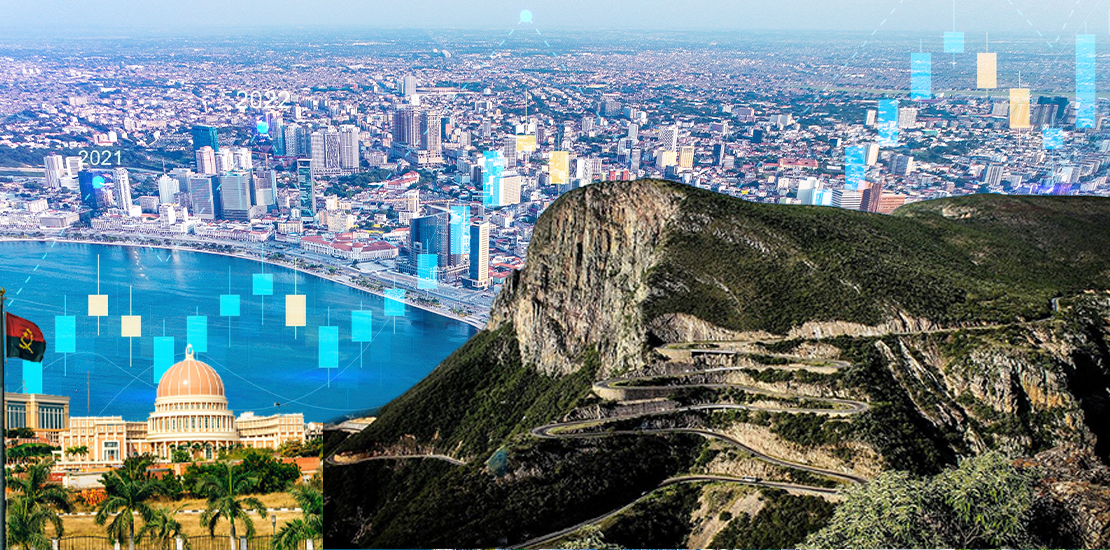
In 2012, Angola launched the Fundo Soberano de Angola (FSDEA) to better manage oil revenues, which had risen sharply after the civil war. Endowed from the outset with $5 billion from hydrocarbon revenues, the fund is designed as a tool for fiscal stabilization, long-term savings and investment support. In a country where oil provides the majority of government revenues and foreign currency, it is intended to reduce vulnerability to price shocks.
In macroeconomic terms, the FSDEA replaces a previous mechanism focused on infrastructure financing. Its architecture provides for a fraction of oil revenues to be paid into the fund when prices are high, with the idea of building up a reserve that can be mobilized in the event of a downturn. This counter-cyclical approach is designed to smooth government revenues and avoid sudden budget adjustments in periods of falling prices. At the same time, the fund must accumulate financial assets that can be passed on to future generations, in order to mitigate the finite nature of oil resources.
The FSDEA's mandate also includes promoting economic diversification. Part of the resources are earmarked for projects in Angola, in infrastructure, agro-industry or tourism, to complement the work of the state-owned oil company Sonangol and other state-owned companies. However, from the mid-2010s onwards, the allocation strategy emphasized external investments. Several billion dollars are entrusted to private equity vehicles managed from abroad, mainly by the Swiss company Quantum Global, with thematic funds invested in infrastructure, energy, forestry plantations or the hotel industry, often via structures domiciled in offshore financial centers.
This use of international platforms is a response to several constraints. The Angolan financial market remains shallow, which limits its capacity to absorb large amounts of capital without straining asset prices. Offshore structures offer a legal framework familiar to institutional investors, and facilitate co-investment with other funds or development banks. They also make it possible to pool risks and mobilize specialized expertise for illiquid or long-term assets. But the multiplication of vehicle companies in offshore jurisdictions makes it more difficult for the public and supervisory institutions to read the portfolio, and fuels questions about the traceability of flows, the level of commissions and the distribution of risks between the State and its private partners.
On paper, the governance of the FSDEA seeks to align itself with international standards. The fund adheres to the "Santiago Principles" and is a member of the International Forum of Sovereign Wealth Funds, which implies a certain transparency in terms of objectives, governance structure and risk management. A Board of Directors appointed by the President of the Republic defines investment policy, oversees its implementation and reports to the Ministry of Finance. External audits are scheduled, and aggregate information on portfolio composition is published, albeit in limited detail for certain vehicles.
In practice, however, several factors have weakened the fund's image. The appointment in 2013 of José Filomeno dos Santos, son of the former head of state, as Chairman of the FSDEA reinforced perceptions of proximity between political power and asset management. The high concentration of investments with Quantum Global prompted criticism of the risk of conflicts of interest and the size of management fees. Since 2017, journalistic investigations and legal proceedings in several jurisdictions have highlighted the role of offshore structures and questioned the robustness of internal controls. Even though some court rulings resulted in the lifting of asset freezes or the dismissal of specific charges, public debate on governance and the use of income intensified.
The arrival of João Lourenço as president in 2017 marks a turning point in this context. His anti-corruption and public sector reform program includes the FSDEA issue, alongside the restructuring of large state-owned enterprises. The head of the fund was replaced, contractual relations with Quantum Global were renegotiated or terminated, and the Angolan authorities took steps to regain direct control of part of the assets housed abroad. At the same time, the legal framework was adjusted to clarify the chain of responsibility, strengthen external auditing and better articulate the fund's role with the management of public debt, foreign exchange reserves and the reform program supported by the International Monetary Fund.
In the early 2020s, the new team is promoting a more cautious approach, combining liquid international financial assets with targeted investments, particularly in Angola and the region. The declared value of the portfolio, now just under $4 billion, reflects withdrawals, market fluctuations and restructuring operations carried out following litigation. Partnerships are being set up with local asset managers to direct part of the resources towards financing SMEs, social infrastructure and projects contributing to non-oil diversification. In the medium term, the FSDEA's credibility will depend on the authorities' ability to maintain clear rules on funding and withdrawals, enhance transparency on offshore investments and demonstrate the fund's impact on economic development, beyond financial indicators alone.
 Ivory Coast

 Algeria
 FR
FR
 EN
EN