
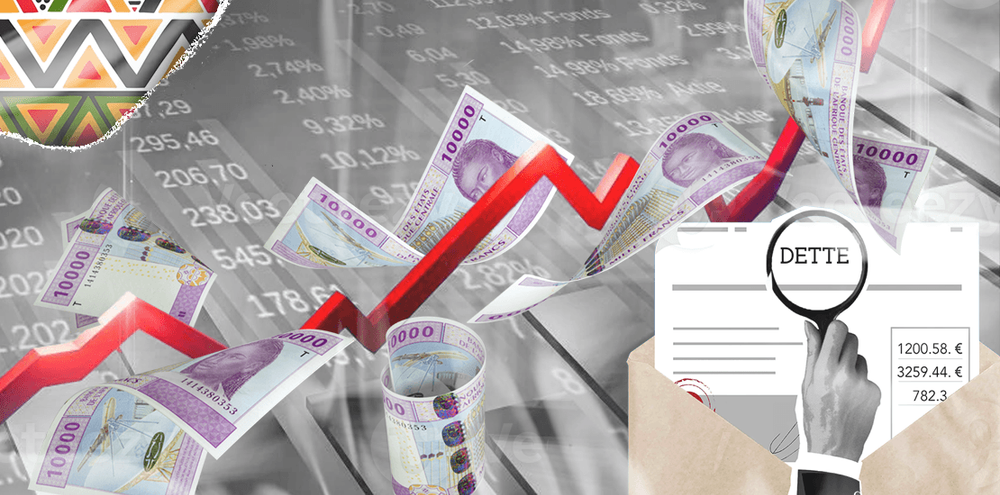
Over the past decade, a number of African countries have discovered hidden liabilities outside their finance acts. The pattern is recurrent: state-owned enterprises or special purpose vehicles borrow abroad, and the state provides a guarantee that is not immediately reflected in the national accounts. When the projects fail, or when raw material prices turn around, these "off-balance sheet" commitments are reintegrated into the budget.
The mechanisms vary, but all follow the same logic of opacity. Pre-financing and resource-backed loans commit future mining or oil revenues, which are held in accounts controlled by the creditors and protected by confidentiality clauses. Other arrangements are based on letters of comfort, implicit guarantees or subsidiaries of state-owned companies. They lower the apparent cost of short-term credit, but make public finances more rigid and complicate restructuring, as collateral on resources or cash sweep mechanisms privilege certain lenders to the detriment of the general interest. International financial institutions have been warning for several years that the widespread use of collateralized transactions increases the risk of over indebtedness, complicates collective negotiations and distorts the sharing of losses between creditors.
Mozambique remains the emblematic case. Between 2013 and 2014, ProIndicus, EMATUM and MAM raised around $2 billion for a tuna fleet and maritime surveillance, without a parliamentary vote. An independent audit published in 2017 established that around $500 million remained unaccounted for and documented overpriced equipment. The revelation of the hidden debts in 2016 led to the suspension of budget support from many donors and a sovereign default. The metical plummeted, inflation soared, and growth halved compared to the previous decade.
In Congo-Brazzaville, opacity took the form of oil pre-financing contracted by the national company SNPC with traders, pledged against future cargoes. Long kept outside the consolidated financial statements, these commitments have now been recognized. In 2017, the inclusion of hidden debts brought public debt to around 110% of GDP, drying up access to conventional financing and triggering difficult discussions with commercial creditors. An IMF-supported program followed in 2019, with audits and transparency requirements, including the publication of oil company financial statements.
Zambia illustrates the gray area of quasi-fiscal commitments. The default on Eurobonds in 2020 revealed a composite liability: bilateral and commercial debts, but also obligations of state-owned enterprises, in particular the electric utility ZESCO, part of whose external, unsecured debt was not clearly reflected in the state's debt. Arrears to electricity producers and opaque supply contracts fed this hidden liability. After more than three years of negotiations under the G20 Common Framework, Lusaka reached a key agreement with its bondholders in 2024 and made progress with its official creditors, while viability analyses now include the debt of state-owned enterprises and provide a framework for new guarantees. This broadening of the statistical perimeter is crucial to avoid the return of invisible debt.
In the Democratic Republic of Congo, the challenge lies in structuring the "minerals for infrastructure" exchange. The Sicomines agreement, signed in 2007, has long operated on the margins of the budget, with repayments linked to mining flows and prolonged tax exemptions. In 2024, its renegotiation increased the infrastructure envelope to 7 billion dollars and introduced a flow of royalties to the State; donors insist that these movements pass through the Treasury and the Finance Act. Public audits have also revealed inconsistencies in the reporting of mining revenues, underlining the urgent need for contractual transparency.
In all these cases, the role of foreign players is central. Investment banks structured high-risk loans, sometimes neglecting due diligence obligations and charging high commissions; consulting and law firms conceived the operations and then, once the crisis was underway, managed lengthy and costly restructurings. Confidentiality clauses maintained the asymmetry of information between executives, parliaments and citizens. Decisions by regulators and courts in the UK and the US have set out responsibilities, without correcting the architecture that allows these debts to escape public scrutiny.
What lessons can we draw for people who pay without having decided? Firstly, broaden the definition of public debt to include state-owned enterprises, guarantees and mining and oil partnerships, and publish consolidated and audited quarterly statements. Secondly, prohibit all sovereign guarantees without an ex-ante vote by Parliament and a public impact study, with clear ceilings on debt servicing in relation to revenues. Thirdly, resource-backed loans must be strictly regulated, with full transparency of contracts, disclosure of collateral and the obligation to pass through the budget for any disbursement. The implementation of transparency standards such as EITI, proactive publication of contracts and independent audits, as well as dissuasive sanctions for non-disclosure, must become obligations, not options.
The cases of Mozambique, Zambia, Congo-Brazzaville and the DRC are not isolated accidents. They reveal an architecture that privatizes profits and socializes losses, to the detriment of budgetary sovereignty and democratic trust. A return to shared responsibility presupposes a simple rule: no dollar borrowed on behalf of the public should remain in the shadows. Only then will states be able to finance roads, schools and hospitals without mortgaging the future, and will citizens cease to be the payers of last resort for contracts that have been hidden from them.
 Algeria

 Democratic Republic of Congo
 FR
FR
 EN
EN