
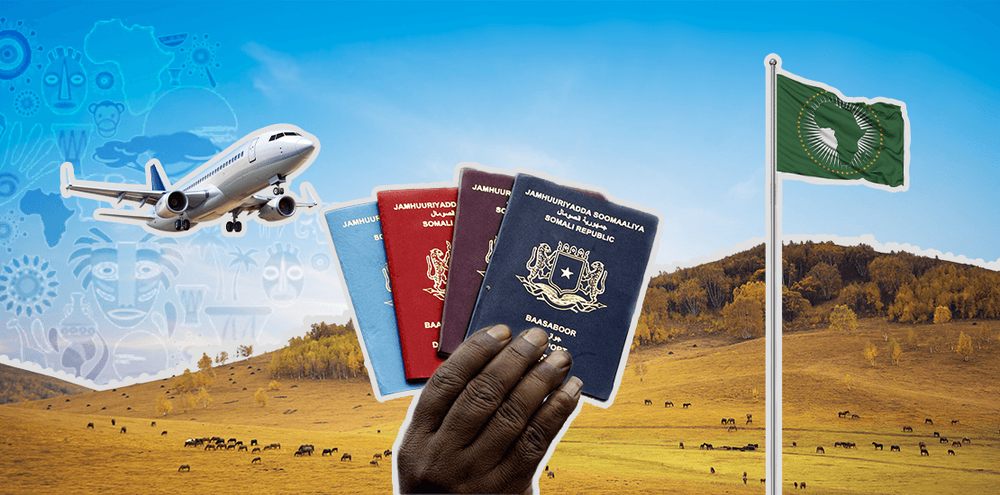
The diplomatic passport, a ceremonial object for some, has become a currency of influence in several African countries. Behind the garnet-red cover and the national crest lies a parallel market where authentic or falsified documents buy support, facilitate money-laundering circuits and open doors to foreign businessmen. This trade thrives on a nurtured confusion: a so-called "diplomatic" passport does not confer immunity. Immunity depends on accreditation under the Vienna Convention, not on the type of passport. This nuance, often ignored by the public, nevertheless fuels an economy of privileges.
The circuit operates through three channels. First, clientelist distribution: elites grant passports to allies or private operators presented as "ambassadors-at-large", blurring the line between representation and favor. Secondly, internal leaks: networks housed in ministries or immigration departments embezzle, modify or prepare documents in exchange for commissions. Finally, opportunistic integration: citizenship programs or honorary statuses adjacent to diplomacy create interstices into which forgers and intermediaries insert themselves.
Recent cases shed light on these mechanisms. In Senegal, an investigation opened in 2021 into the trafficking of diplomatic passports uncovered a system combining false civil status documents and promises of goodwill. In May 2022, two members of parliament were convicted for their role in facilitating documents for third parties, an implacable demonstration of the porosity between political capital and document rent. The appeals, still being examined in 2023, have not erased the fact that proximity to power is a resource.
In Gambia, police arrested foreign ministry officials in 2019 for illegally procuring diplomatic passports. The proceedings, spread over several years, led to resounding acquittals in 2025, while the government denied fanciful figures circulating on social networks. Judicial reversals do not deny the existence of a problem: they point to the difficulty of tracing administrative responsibilities, the fragility of chains of evidence and the political embarrassment when a compromise touches the heart of the executive.
Liberia offers a different scene: in 2022, the discovery of a diplomatic passport in the possession of a businessman arrested in the United States for fraud forced the executive to temporarily suspend the issuance of these documents and to commission an audit. The revelations echoed earlier suspicions about "passbooks" issued to ineligible persons. The episode illustrates a crucial point: in administrations where discretionary decision-making is little controlled, the symbolic rarity of the diplomatic passport creates a premium for connivance.
Even more structural, the case of the Comoros shows how a legal system can go awry. Originally designed to finance development through the sale of citizenship, the program has seen the emergence of parallel circuits where thousands of passports (including diplomatic ones) have been sold outside official channels. Foreign beneficiaries, sometimes from sectors targeted by sanctions, would have used these documents to travel, open accounts and circumvent controls. The trials that followed, with heavy sentences handed down in 2022, mark one of the rare moments when the state has turned against its own networks.
Elsewhere, diplomacy serves as a screen for money-laundering schemes: in 2023, a filmed investigation showed how an "ambassador-at-large" in Zimbabwe boasted of using his diplomatic cover to smuggle gold and cash, even promising facilities to supposed investors. The official reaction, with announcements of investigations, underlines the ongoing tension between the need to attract capital and the obligation to clean up rapidly capturable channels of power.
Sierra Leone is the latest warning sign. In the autumn of 2025, the revelation that a Turkish drug baron held a Sierra Leonean diplomatic passport prompted the authorities to open an investigation and issue a series of denials. This case, set against the backdrop of wider controversies concerning the hold of a wanted Dutch trafficker and alleged links with local officials, shows how promiscuity between business, politics and transnational crime can coalesce around a simple travel document, as long as controls on issuance and traceability remain weak.
The experts interviewed agree: "The diplomatic passport is a risk amplifier when governance is weak", sums up a researcher specializing in organized crime in Africa. Criminal networks value three attributes: speed (shorter queues and formalities), discretion (less fussy controls) and aura (the argument of authority at the airport or bank). But they also come up against a reality: most immunities are attached to the accreditation, not the passbook. This discrepancy between perception and positive law creates opportunities for deception, whether by a poorly trained border agent or a complacent financial institution.
The official response to this situation has been to focus on three areas. Firstly, reorganization: independent audits of registers, cancellation of irregular passport books, strict limitation of beneficiaries and periodic publication of indicators (number of active, lost and revoked diplomatic passports). Secondly, interconnection: systematically feeding stolen or revoked documents into Interpol databases and electronically tracing batches of blank passport books. Finally, education: train agents and airlines in the distinctions between passports, accreditation and immunities, to avoid both abuse and de facto privileges.
It's a thankless battle, because it takes place behind the scenes, far from the grand speeches. But it is decisive: in this age of instantaneous financial flows and cocaine routes across the Atlantic, a misallocated diplomatic passport weighs far more than its gram of paper. It reveals an institutional order: one in which the prestige of the State is on lease, or one in which it is protected by rules and evidence. In Africa as elsewhere, it is this choice, discreet but structuring, that will determine whether "power passports" remain instruments of public service or private sesames at the service of grey circuits.

 Algeria

 Democratic Republic of Congo
 FR
FR
 EN
EN