
The problem
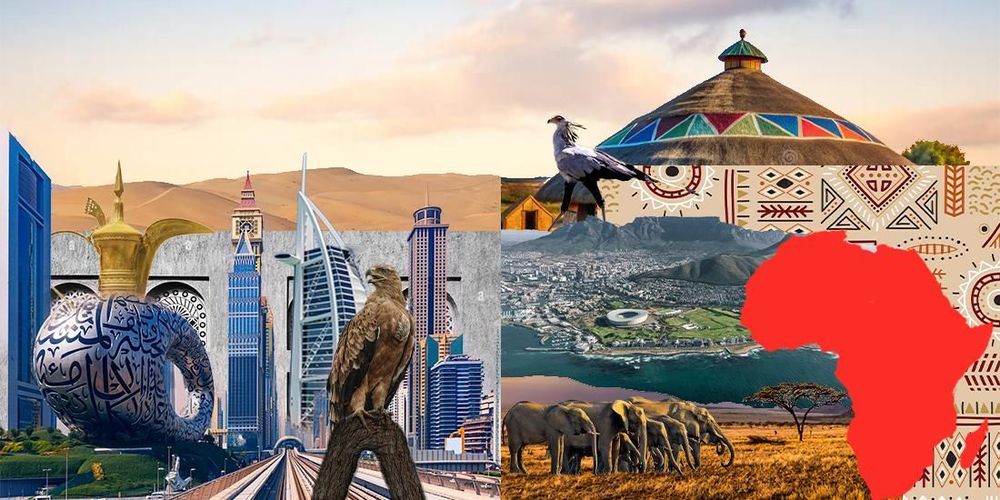
Triggered by a new leak of property records, the collaborative investigation Dubai Unlocked redraws an unprecedented map of assets held in Dubai by African officials and criminal figures. Beyond the fascination with towers and artificial archipelagos, the data reveal the opacity of financial circuits: properties acquired through shell companies, nominees, or trust structures—sometimes amid active anti-corruption proceedings in countries of origin. The aim is not to single out a host country, but to understand what these data say about weaknesses in African governance and the transnational mechanics of illicit flows.
What the data show
Coordinated by a consortium of media outlets and NGOs, the investigation relies primarily on 2022 datasets aggregated from multiple sources, including land registries and public-service records. Partners processed millions of data points and cross-checked hundreds of lists to verify owners, parcels, and estimated values. A prior leak had already hinted at the scale—roughly 800,000 properties and 274,000 identified owners, many of them foreign. Here, the interest lies less in totals than in profiles: politically exposed persons, individuals implicated in embezzlement cases, financial intermediaries, or close associates of leaders.
Emblematic African cases
Names vary by country, but the picture is consistent. Former senior officials from Gabon, close associates of power in Congo-Brazzaville, members of Equatorial Guinea’s presidential family, and Angolan figures previously linked to predatory schemes appear as beneficial owners or co-owners. In some instances, values are documented: a €3.6 million villa; portfolios exceeding €14 million; luxury apartments on artificial islands. Together, they sketch a geography of rent, where offshore real estate serves as a vault.
Methodological caution
Appearing in a property database is not proof of wrongdoing. Some individuals have legitimate, declared income; others dispute any irregularity. As the investigation’s partners stress, “the presence of a name is not, in itself, evidence of fraud.” This caveat is central: the work highlights risks and inconsistencies, not verdicts. It calls for adversarial review, mutual legal assistance, and better disclosure of beneficial ownership.
Mechanisms of opacity
Why real estate? Because it allows funds to be “parked,” sometimes anonymously, and recycled upon resale. Three techniques dominate: (1) interposing holding companies, foundations, or trusts—often domiciled in opaque jurisdictions; (2) using nominees—lawyers, business partners, family members—to mask the beneficial owner; (3) exploiting variable entry controls, including cash or crypto, before “re-banking” on exit. Undercover recordings documented lax practices by some brokers (“bags of cash,” “no questions”), while developers say they apply enhanced due diligence and promise internal reviews. Local authorities insist on “zero tolerance” for non-compliance and maintain the city is “not a haven for illicit funds.” These opposing claims capture a tightrope: a highly liquid, coveted market where compliance is improving, yet blind spots persist (notably rentals, which are less tightly regulated than sales).
Laundering circuits: from diversion to stone
On the African side, the typical pattern blends public office and political entrepreneurship. Diverted funds are layered through relay entities (service firms, consultancies, special vehicles), routed via foreign accounts, then converted into real assets. Real estate functions as a laundering layer: it transforms flows into patrimony, hard to seize without international cooperation. These dynamics are not unique to the Gulf—London, Johannesburg, Paris, and Mauritius are also implicated—but Dubai concentrates multiple attractors: convertibility, security, air connectivity, rental yields, social status, and a galaxy of professional intermediaries (private bankers, lawyers, agents) who may fail in their duty of vigilance.
Transparency and regulation: a moving landscape
International signals are mixed. Emirati authorities have enacted reforms and administrative sanctions in recent years, culminating in removal from enhanced monitoring by the Financial Action Task Force in early 2024. The European Union, for its part, removed the UAE from its internal high-risk list in 2025. These decisions acknowledge tangible progress; they do not close the file. Anti-corruption groups argue vigilance remains uneven and urge continued scaling of controls—especially on beneficial ownership and suspicious transaction reporting by real-estate professionals.
The cost to African societies
The issue goes beyond ethics to macroeconomic balance. UN estimates put Africa’s annual losses from illicit financial flows at tens of billions of dollars—resources missing from budgets, investment, and essential services. Each offshore apartment acquired by an unscrupulous official potentially translates into a school not built, an under-equipped clinic, a road never rehabilitated. For national treasuries, the challenge is traceability: linking asset to person, proving illicit origin, and securing restitution orders.
African responses and strategies
Several states have launched asset audits or targeted probes into exposed figures. Specialized prosecutors are strengthening financial expertise; financial intelligence units exchange information more systematically. Civil society—NGOs, investigative journalists, whistleblowers—acts as a catalyst. Beyond individual cases, three priorities stand out: (1) generalize national, interoperable beneficial-ownership registries; (2) enforce credible, verifiable asset declarations for public officials; (3) expand mutual legal assistance and asset-recovery tools, including settlements with transparency safeguards.
What “Dubai Unlocked” changes
The investigation does not create the problem; it documents it with new granularity. By matching parcels, people, and entities, it gives African authorities actionable leads—addresses, floor areas, acquisition dates, co-owners. It also assigns responsibility across the chain: leaders to explain sources of funds; professionals to strengthen vigilance; international partners to automate information exchange and close the gaps through which public revenues vanish.
Conclusion
Dubai Unlocked is neither an indictment of a financial hub nor an echo chamber of suspicion. It is a revealer. It shows how real estate becomes, for some African elites and criminal networks, an instrument to store and recycle wealth. The response must be systemic: beneficial-ownership transparency, enhanced due diligence for exposed persons, judicial cooperation, and exemplarity at the top of African states. At that price, a skyline map can cease to be a topography of blind spots and return to what it should be—a landscape of productive, lawful investment serving stronger, fairer African economies.
 Ivory Coast

 Algeria

 Democratic Republic of Congo
 FR
FR
 EN
EN