
 Angola
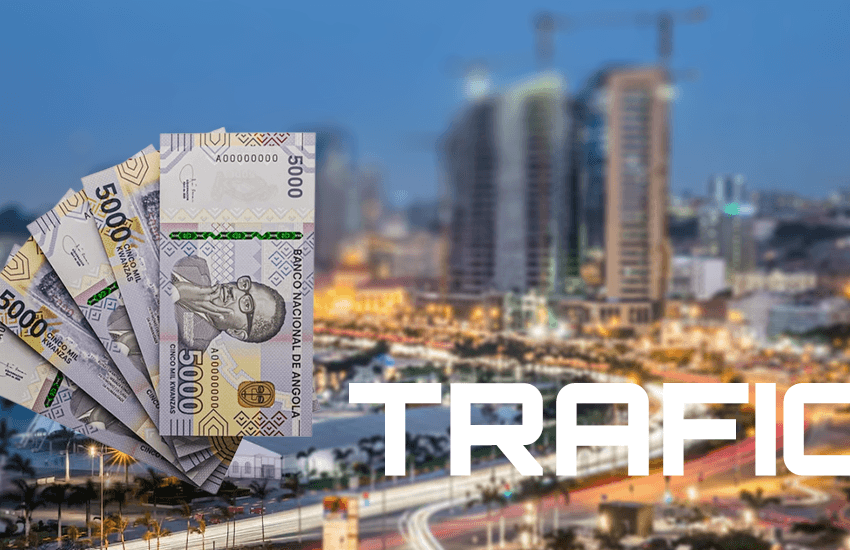
On January 31, 2025, the Federal Criminal Court in Bellinzona convicted Trafigura of bribery of a foreign public official in connection with oil contracts in Angola. Former Chief Operating Officer Mike Wainwright was sentenced to 32 months in prison, part of which was suspended. The company was fined CHF 3 million and ordered to provision USD 145 million for potential compensatory claims. The ruling is unprecedented in Switzerland for a global commodities trader, even though the defendants retain the right to appeal.
At the core of the case were illicit payments made between 2009 and 2011 to secure access to maritime transport and bunkering contracts with the national oil company Sonangol. Swiss prosecutors described bribes totaling approximately €4.3 million, supplemented by USD 604,000 in cash delivered in Angola, for the benefit of Paulo Gouveia Jr., head of Sonangol Distribuidora. The funds were routed through a web of intermediaries and shell companies—including ConsultCo Trading Ltd—around a former employee known internally as “Mr. Non-Compliant.” The scheme allegedly facilitated, among other things, eight vessel charters and a bunkering contract.
Court hearings shed light on the trader’s internal controls. Former CFO Pierre Lorinet acknowledged that “large” intermediary invoices did not raise “red flags” at the time, given internal contracting procedures. The defense emphasized the existence of compliance frameworks deemed, by the company, “consistent with practices of the period.” The judges nonetheless found that Trafigura had failed to take “all reasonable and necessary organizational measures” to prevent corruption—crossing a symbolic threshold in establishing corporate criminal liability.
To grasp the case’s significance, one must recall Trafigura’s position in Angola’s oil economy at the turn of the 2010s. The trader built an extensive distribution network via Pumangol (a Puma Energy subsidiary) and effectively controlled a large share of refined-product imports—a market then valued at several billion dollars annually. In 2012, Trafigura sold 20% of Puma Energy to Sonangol, cementing a strategic alliance at the apex of the national oil chain. In 2021, the partners unwound these cross-shareholdings: Sonangol took back Puma Energy’s Angolan assets, while Trafigura repurchased Sonangol’s global stake in Puma Energy.
This closeness between a trading house and the political-military elites of a rent-based state also materialized in sensitive shareholdings. In 2021, Trafigura paid USD 390 million to buy out the stake of an influential retired general—close to the presidential circle—in the ownership structure linked to Puma Energy. The transaction, revealed at the time by financial media, illustrates the cost of disentangling relationships forged during the dos Santos era, when oil rents sustained a system of privileges and allegiances. It also underscores how politico-economic proximity can complicate the identification of conflicts of interest and risks of regulatory capture.
The Swiss case thus illuminates a broader issue: resource governance in Angola, whose public revenues remain heavily dependent on oil. Since 2019, the state has begun reconfiguring its institutional architecture by transferring concessionaire functions to the National Oil, Gas and Biofuels Agency (ANPG), separating regulation from operations. Luanda joined the Extractive Industries Transparency Initiative (EITI) in 2022; in 2025, EITI assessed Angola’s implementation at 63.5 points—evidence of progress, but also of substantial room for improvement, particularly on public disclosure and flow traceability. In parallel, Angola is investing to reduce reliance on fuel imports (with the Cabinda refinery slated to come onstream in 2025) while gradually reforming fiscally costly fuel subsidies—reforms that triggered deadly protests in the summer of 2025.
What does the affair reveal about the limits of international justice?
First, the asymmetry between gains and sanctions. Swiss prosecutors cited illicit profits of roughly USD 143.7 million attributable to improperly obtained advantages. The corporate fine (CHF 3 million) remains modest, even if the court-ordered USD 145 million provisioning for potential damages partially offsets the symbolic imbalance. Second, justice moves slowly: more than a decade separates the conduct from the rulings, amid cascading procedures, appeals, and mutual legal assistance dependent on third-country cooperation. Third, the sophistication of schemes—bespoke consultancies, façade contracts, offshore circuits—complicates proof and diffuses accountability.
This inertia is not unique to Angola. It fits a broader pattern involving trading houses: in 2024, Trafigura pleaded guilty to U.S. authorities for corruption related to Brazil’s Petrobras, underscoring the recurrence of intermediation and overbilling practices in opaque markets. Swiss case law nonetheless signals a deeper shift: trading hubs (Geneva, Zug) are deploying more credible enforcement tools—at the risk of pushing activities toward less demanding jurisdictions.
For Angolan citizens, the stakes are concrete. Opaque arrangements raise the cost of imported petroleum products, distort competition, and divert fiscal resources that could fund social services. When the state seeks to clean up the system by cutting subsidies that have become fiscally unsustainable, the price shock fuels social tensions and erodes trust. Conversely, contractual transparency, systematic disclosure of intermediaries and beneficial owners, and clear delineation of roles between Sonangol as operator, ANPG as regulator, and the line ministry can narrow the space for arbitrariness. Lenders (IMF, World Bank) emphasize that well-calibrated subsidy reforms, paired with safety nets, can improve efficiency without durably increasing poverty.
The political question remains
Angola has embarked on institutional reforms and efforts to disentangle public and private interests. Yet the legacy of a rent-based economy, concentration of trading among a few global actors, and fragile internal controls keep the door open to slippage. The Bellinzona ruling does not close the chapter; it restates a democratic truism: where collective wealth is negotiated in the shadows, the temptation of capture is greatest. Consolidating ANPG, partially and transparently privatizing Sonangol, opening logistics and distribution to effective competition, proactively publishing contracts, and strengthening citizen oversight—anchored in international standards—will be the real markers of durable change.
Conclusion
The Trafigura case in Angola is a revealing test. It exposes the vulnerability of a strategic sector to private influence, documents weaknesses in multinational internal safeguards, and probes the capacity of Northern jurisdictions to sanction conduct committed in the Global South. The Swiss convictions, the detailed bribery scheme, and the mapping of interests converge on a clear lesson: without contractual transparency, strict separation of functions, and citizen oversight, oil rents remain instruments of power rather than levers of development. In Luanda as in Geneva, prevention through governance will always cost less than repair through the courts.
 Togo
Togo
 FR
FR
 EN
EN