
 Togo
Togo
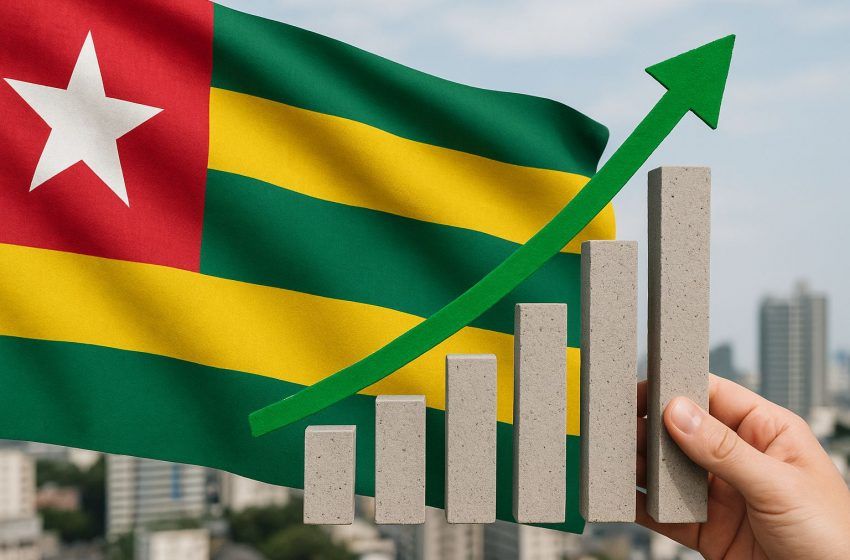
Togo has crossed a historic threshold in the 2025 edition of the United Nations Development Programme’s Human Development Report. With a Human Development Index (HDI) of 0.571, the country has moved from the category of “low human development” to that of “medium human development.” It now ranks second within the WAEMU and fourth in ECOWAS—behind Cabo Verde, Ghana, and Côte d’Ivoire, and ahead of Nigeria. Beyond its symbolic value, this progress validates a public policy trajectory centered on social investment, health, education, and financial inclusion, while strengthening Togo’s international image as a reform-minded nation.
“Togo now ranks 161st out of 193 countries and territories, gaining two positions—fourth in West Africa and second within WAEMU,” emphasized Binta Sanneh, UNDP Resident Representative, at the national launch of the report in Lomé. She noted that the 2025 edition comes at a time when the country is placing artificial intelligence and digital transformation at the service of human development: “If designed inclusively, AI can become a powerful lever for equal opportunity.”
This momentum is rooted in a public strategy explicitly described as “human-centered,” driven by the President of the Council, Faure Gnassingbé. The Government Roadmap Togo 2025 places the strengthening of social inclusion and cohesion at the top of its priorities, with a focus on health coverage, access to basic services, and education aligned with labor-market needs. “The report comes at a particularly timely moment,” added the Minister and Secretary-General of the Presidency of the Council, Sandra Ablamba Johnson, pointing to the stabilization of health and education indicators and the rise in gross national income per capita from USD 2,748 to USD 2,856 (2021 PPP).
The figures confirm a catch-up effect. In the region, Cabo Verde (0.668) and Ghana (0.628) lead the “medium” category, while Côte d’Ivoire (0.582) has made notable gains. With an HDI of 0.571, Togo has now overtaken Nigeria (0.560) and joined the group combining longer life expectancy, increased years of schooling, and improved living standards. The two-place rise in the global ranking reflects tangible progress across these three core dimensions of the HDI.
On the ground, several structural reforms underpin this advancement. The rollout of Universal Health Insurance beginning in 2024 has expanded social protection. The extension of school feeding programs—linked to local procurement—supports school attendance and educational outcomes while stimulating agricultural value chains. At the same time, the digitalization of social safety nets has demonstrated the country’s capacity to rapidly target vulnerable households. Together, these policies illustrate the shift toward a platform state that invests simultaneously in human capital and innovation.
The implications are far-reaching. Socioeconomically, the consolidation of human-development gains lays a foundation of productivity and resilience, conducive to private investment and local entrepreneurship. Diplomatically, the coherence of reforms and Togo’s regional positioning—particularly on stability and mediation—enhance its credibility and attractiveness. As the UNDP has reiterated, “development is прежде and foremost a matter of human vision”: Togo’s trajectory shows that inclusive growth, underpinned by data, health, and education, can scale up and permeate the entire national fabric.
 Ghana
Ghana
 FR
FR
 EN
EN