
 Ghana
Ghana
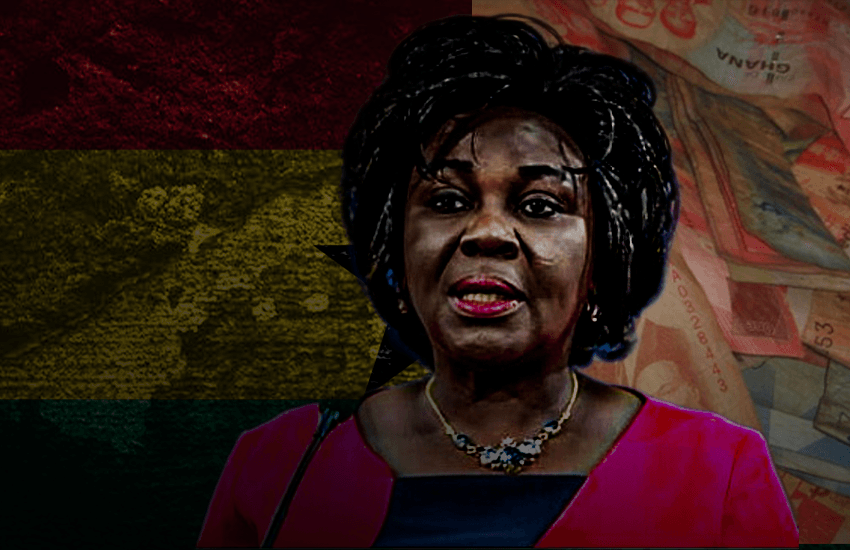
In July 2023, Ghanaian public opinion was jolted by revelations that a colossal sum—held in foreign currency and Ghanaian cedis—had been stolen from the home of Cecilia Abena Dapaah, then Minister for Sanitation and Water Resources. What initially appeared to be a case of “domestic theft” quickly escalated into a matter of state: the origin of the funds, suspicions of money laundering, the effectiveness of anti-corruption bodies, and public perceptions of the political elite were suddenly at stake.
Established facts
On July 22, 2023, Ms. Dapaah resigned. In her letter, she stated, “I do not want this matter to become a concern of the government,” while asserting that she would “without any doubt” be exonerated. Two days later, the Office of the Special Prosecutor (OSP) arrested her for questioning and searched her residences. Investigators announced the seizure of USD 590,000 and GHS 2.73 million in cash, in addition to sums initially cited in court proceedings (USD 1 million, EUR 300,000, and several million cedis reported as stolen). What followed was a procedural tug-of-war: the freezing of accounts and investments, a decision by the High Court in Accra (August 31, 2023) ordering the return of seized funds and the lifting of freezes, then renewed freezes and re-seizures justified by the OSP as necessary for the investigation.
In 2024, the OSP closed the “corruption” angle strictly speaking and referred the case to the Economic and Organised Crime Office (EOCO) to assess potential money-laundering and “structuring” offenses. In May 2024, asked for an opinion, the Attorney-General (AG) concluded that there was “no basis” to open a money-laundering investigation on the file submitted; EOCO returned the case. In parallel, five petitioners seized the Commission on Human Rights and Administrative Justice (CHRAJ), requesting a wealth review of the former minister on grounds of “disproportionate wealth.” In 2025, the OSP’s semiannual report stated that “no direct and immediate evidence of corruption” had been established regarding the seized funds and frozen accounts, while noting “strong indications” of money laundering within EOCO’s remit. Under new leadership, EOCO ultimately reopened its review.
Gray areas and the coherence of explanations
Procedural filings and official statements reveal shifting accounts of the origin of certain sums. According to the initial police narrative, USD 800,000 allegedly belonged to a deceased brother, and GHS 300,000 constituted a funeral fund; however, USD 200,000 and EUR 300,000 remain insufficiently explained. Beyond disputes over figures, the core concern lies in the holding of very large amounts of cash in a country where informality and low banking penetration coexist with a strengthening anti-money-laundering framework. Ms. Dapaah’s defenders cite family savings, gifts, or inheritances; critics view the cash hoard as a symptom of unexplained enrichment.
Institutional interplay and a legal fault line
Created in 2018 as Ghana’s anti-corruption spearhead, the OSP pushed the inquiry to the limits of its mandate: lacking “direct and immediate” evidence of corruption, it referred the laundering hypothesis to EOCO. Ghanaian law, however, treats money laundering as a collateral offense—in principle requiring a predicate offense (typically an economic crime or corruption) to ground the investigation. This is precisely where the AG found the OSP referral “lacked a basis”: without a clearly established primary offense, EOCO could not legally proceed. This institutional ping-pong blurred the case’s readability while exposing a structural tension: how should the system address the “unexplained” when it does not readily map onto a source crime?
Context: unexplained wealth and public trust
The affair erupted amid an economic crisis, an IMF program, and inflationary pressures, reviving perceptions of an out-of-touch elite. In Transparency International’s 2024 index, Ghana scored 42/100 and fell to 80th place, confirming years of stagnation. The Center for Democratic Development (CDD-Ghana) summarized the trend as a persistent “implementation gap” between norms and enforcement. In this context, images of suitcases of cash in a minister’s home—absent formal proof of corruption—carry a powerful political and social charge, reinforcing the idea of double standards and an economy where informal rent-seeking thrives.
Actors and strategies
Cecilia Dapaah chose early resignation as a political de-escalation move, pledging cooperation while disputing reported figures.
The OSP emphasized an evidence-based approach, applying a demanding standard (“no direct and immediate evidence”) and calling for reforms—lifestyle audits, civil asset recovery without conviction, and a reversal of the burden of proof for unexplained wealth.
The AG maintained a strict reading of positive law, underscoring EOCO’s procedural limits and the need for a primary criminal anchor.
EOCO initially paused, then reopened the file in 2025 under new leadership—signaling that the laundering track is not legally extinguished.
CHRAJ, seized by petition, represents an alternative route: unjustified enrichment assessed against asset-declaration obligations (Act 550) and the constitutional principle of probity. This quasi-administrative pathway can advance even absent a criminal conviction.
What’s at stake for citizens and institutions
Three risks stand out. First, a trust deficit: when cases are bounced between agencies, perceptions of impunity take root. Second, a legal dead end: if laundering requires an elusive predicate offense, the “unexplained” remains beyond reach—despite offending common sense. Third, a normative signal risk: in an economy with high off-bank liquidity, the absence of clear rules on cash-holding limits for public officials fuels ambiguity.
What do the data and the law say?
Act 550 requires senior officials to declare assets and liabilities to the Auditor-General at the start and end of their terms, and periodically thereafter. Yet effectiveness—ex ante checks, independent verification, deterrent sanctions—remains weak. The same applies to flow traceability: the OSP reported a cross-border inquiry with the FBI when U.S. transfers were alleged, without identifying “direct and immediate” evidence of corruption. The episode highlights the gap between investigative capacity and the sophistication of modern asset arrangements.
Consequences and reform avenues
The Dapaah affair is less an isolated case than a stress test of Ghana’s anti-corruption architecture. Three levers emerge: (1) targeted, strengthened verification of asset declarations (lifestyle audits, banking/tax cross-checks, scrutiny of relatives and nominees); (2) civil tools for recovering assets based on the unexplained, under judicial oversight, reducing reliance on criminal convictions; and (3) clearer coordination among OSP–EOCO–CHRAJ–Police, with information-sharing protocols and timelines. The goal is not to “make an example,” but to render institutional responses predictable, regardless of the subject’s status.
Conclusion
At this stage, the courts have not established “direct and immediate” corruption by Cecilia Dapaah. Yet the origin of part of the cash remains insufficiently explained against the transparency standards expected of a senior public official. By reopening the laundering track, EOCO signals that the case is not closed. Above all, the affair leaves a durable imprint: in a democracy under economic strain, state credibility hinges as much on procedure as on proof. The issue transcends one individual—it tests the institutions’ ability to narrow the implementation gap between rules and practice, and to treat the unexplained not as an inevitability, but as an anomaly worthy of investigation.

 Togo
Togo
 FR
FR
 EN
EN