
 Kenya
Kenya
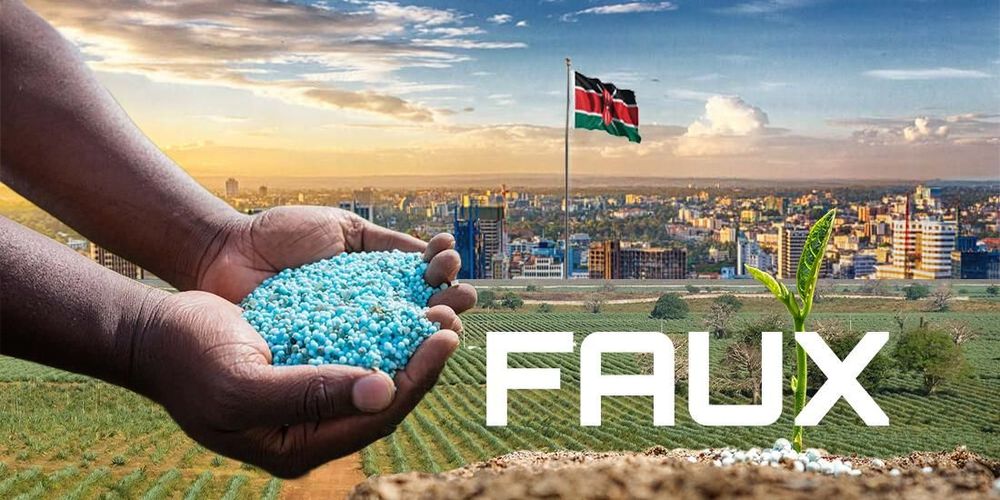
At the height of the 2024 long rains, thousands of Kenyan farmers discovered that bags of “fertilizer” purchased under the public subsidy program were nothing more than quarry dust, diatomite, or other inert materials relabeled and resold. Official confirmation soon followed from the standards authorities: substandard batches had indeed circulated through the warehouses of the state distribution agency. “Beware of substandard fertilizer,” the regulator warned publicly, naming an implicated brand and citing non-compliant samples. Dubbed the “fake fertilizer scandal” by local media, the affair triggered a cascade of investigations, criminal prosecutions, and even an attempted impeachment of the Minister of Agriculture.
Established facts
In the spring of 2024, the standards authority seized 5,840 non-compliant bags from warehouses operated by the National Cereals and Produce Board (NCPB), the logistical backbone of the subsidy program. Products marketed as “organic”—notably under the labels GPC Original Plus and BL-GPC Original—were found to consist largely of diatomite, far from the requirements of national standard KS 2290:2018. In parallel, anti-corruption police and prosecutors targeted two procurement tracks: on the one hand, “soil conditioners” reclassified and sold as fertilizer; on the other, an упаковing and labeling chain that enabled the fraud.
Administrative and political responsibility
Three levels of accountability emerged. First, the NCPB, which received and distributed non-compliant products. Three of its senior officials, including the managing director, were charged with conspiracy to defraud, abuse of office, and use of forged documents, in a case valued at roughly KSh 209 million. Second, the Kenya Bureau of Standards (KEBS), which suspended several officers and withdrew approvals after determining that the product actually sold differed from what had originally been certified. Third, the Ministry of Agriculture: its head, under intense political pressure, was ultimately cleared by a special parliamentary committee—without resolving the central question of where, precisely, quality assurance failed along the chain.
Companies implicated and lines of defense
Two firms linked to businessman Josiah Kariuki—SBL Innovate Manufacturers Ltd and Fifty-One Capital (K) Ltd—sit at the center of the “organic fertilizer” strand. Prosecutors allege they unlawfully affixed the conformity mark and sold inert materials as fertilizer. The defense counters that the regulator’s statements are “false and defamatory,” with SBL even suing the standards authority. On another front, KEL Chemicals saw its plant temporarily shut by authorities; management acknowledged a “production defect” limited to a few thousand bags over a short period. Across cases, the evidentiary burden is the same: laboratory analyses and traceability records must establish the true composition and movement of each batch released.
How the fraud worked
Investigators—and a widely viewed investigative documentary—uncovered a simple but effective scheme: extraction of cheap materials (soil, diatomite), bagging them in printed sacks, then injecting them into the public circuit via NCPB depots, where farmers’ e-vouchers are redeemed for subsidized bags. Counterfeit packaging, misuse of the standards mark, and porous intake controls proved decisive. A parliamentary witness captured the gravity succinctly: “Farmers’ socio-economic rights were violated,” a member of the special committee insisted.
Farmers hit at the worst possible moment
The long-rains season determines the foundation of maize and staple harvests. Receiving quarry dust instead of nutrients translates into delayed planting, yield losses, re-seeding and corrective top-dressing costs—and, above all, a collapse of trust in the public supply chain. Facing public outrage, the President ordered compensation: “Farmers… must be compensated,” he declared. In practice, the executive proposed supplementary top-dressing and, for unused lots, exchanges for compliant fertilizer. But the gap between political promise and bureaucratic execution fueled anger, with farmers’ groups denouncing opaque procedures and delayed redress.
An economic and food-security shock
Agriculture accounts for more than a fifth of Kenya’s GDP and underpinned the growth rebound in 2023 after years of drought. By undermining on-farm productivity, the incident adds vulnerability in a country still dependent on cereal imports and prone to maize price volatility. The fiscal cost is real: the state, which sells the subsidized bag at KSh 2,500, must fund recalls and compensation while tightening controls. The social impact is palpable—fragile smallholders, strained cash flows, seasonal indebtedness, and eroding confidence in institutions meant to protect agricultural consumers.
The broader frame: unfinished reforms
The e-voucher digitized access to subsidies, but the physical chain—tendering, local sourcing, formulations, certificates, logistics, intake inspections—remains the blind spot. Three failures stand out: (1) inadequate batch-level traceability (unique identifiers, assigned labs, public registries); (2) ineffective surprise audits in public warehouses and at blending facilities; and (3) insufficient separation of duties between certification, inspection, and distribution. Without independently audited interfaces between the standards body and the public distributor, the temptation to game the conformity mark will persist.
Politics in the equation
The shockwave reached the top of the state: an impeachment motion was filed against the Agriculture Minister. Although a special committee ultimately deemed the evidence insufficient for removal, controversies over alleged “pressure” and the committee’s composition tarnished the process. Without adjudicating those claims, the policy lesson is clear: the governance architecture for agricultural inputs must be insulated from conflicts of interest, with mandatory publication of tests, contracts, and flows.
What the case reveals
First, a control system focused on paperwork—permits and certificates—rather than independent scientific proof and last-mile physical verification. Second, the power of packaging: with a printed bag and a conformity stamp, a “packer” becomes a “fertilizer” in the eyes of the counter. Third, insufficient preparedness for mass fraud: even in 2025, anti-counterfeiting authorities seized hundreds of thousands of empty bags intended for deception—evidence that counterfeit logistics are adapting faster than controls.
What guarantees for the next season?
The remedies are well known: tamper-proof serialization of every bag and a public batch registry; mandatory independent conformity tests before and after NCPB delivery, with published results; cross-audits by KEBS–laboratories–NCPB under the Auditor-General’s supervision; deterrent penalties for misuse of the standards mark; and an automatic, frictionless compensation mechanism via e-voucher when non-compliance is proven. Over the longer term, input policy must align subsidies with soil health and diversification—regular testing, liming, rotations—lest each “lost season” compound food-security risks.
Conclusion
The fake fertilizer scandal is not merely a fraud; it is a full-scale stress test of a public system tasked with delivering millions of bags each year. It exposed failures of traceability, integrity, and governance that—if left uncorrected—will undermine agricultural productivity and public trust. The moment calls neither for scapegoats nor vague promises, but for institutional engineering: transparent batches, independent controls, and accountability at every link in the chain—so that “subsidized fertilizer” once again becomes what it should be: a yield enhancer, not a systemic risk.


 FR
FR
 EN
EN