
 Liberia
The issue at the heart of the investigation
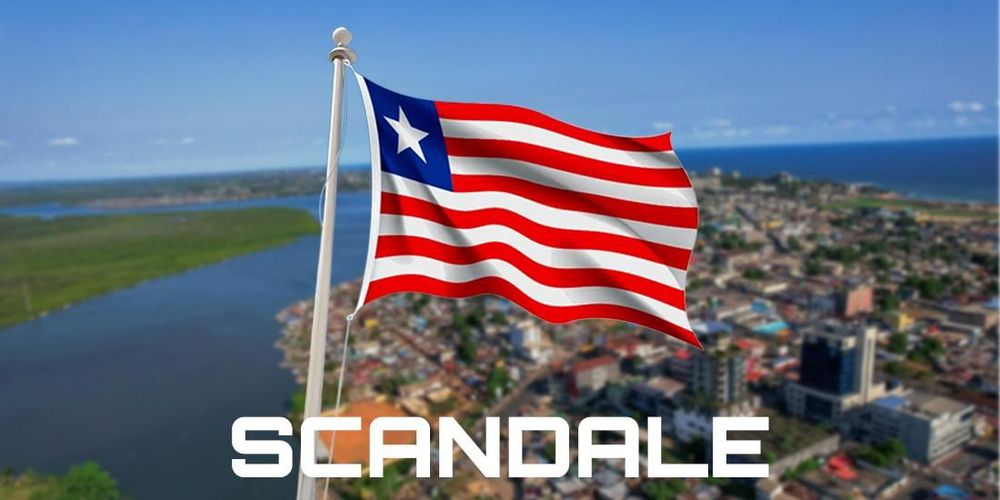
In October 2022, Liberian authorities—supported by foreign partners—seized 520 kg of cocaine in Monrovia, concealed in a container of frozen goods. The shipment was valued at approximately USD 100 million—nearly one-fifth of the country’s annual budget by contemporaneous estimates. Seven months later, on May 18, 2023, a popular jury of Criminal Court “C” acquitted all four defendants. The government’s appeal failed, and the case spiraled into a crisis of confidence: the acquitted suspects briefly became untraceable, an open rift emerged between the Executive and the judiciary, and allegations of judicial corruption circulated. This review revisits the facts, the procedural blind spots, and the systemic effects of a case that has become emblematic of rule-of-law fragilities in West Africa.
Established facts
The seizure followed international intelligence: U.S. and Brazilian services flagged a suspicious container traveling from South America to Liberia. Upon arrival, the container—declared as frozen pork feet or similar foodstuffs—was routed to a warehouse operated by TRH Trading, a major food importer. Investigators discovered 520 kg of cocaine inside. Four men were arrested for allegedly attempting to “take possession” of the cargo and to purchase the container at a price wholly disconnected from its commercial value: a Liberian (Oliver Zayzay), a Bissau-Guinean (Adulai Djibril Djalo), a Lebanese national (Makki Ahmed Issam), and an individual presented as Guinean/Portuguese (Malam Conte). Charges included money laundering, unlawful possession and importation of narcotics, and conspiracy. The trial opened in early 2023 and, against expectations, ended in a unanimous acquittal; the court also ordered the return of roughly USD 200,000 seized during the arrests. On May 31, 2023, the Supreme Court of Liberia rejected the Ministry of Justice’s attempt to stay enforcement of the verdict.
Procedural blind spots and gray areas
Several weaknesses emerged from the hearings and rulings. First, charge calibration: the presiding judge later held that the charges were disproportionate to the evidence presented, pointing to a poorly calibrated prosecutorial strategy. Second, chain of custody and control: despite maritime alerts, the container was released to TRH Trading’s warehouse without enhanced inspection, and arrests were reportedly made before any controlled delivery to the suspects—facilitating a defense narrative that the men had come merely to collect frozen food. Third, a financial gap fueled doubt: while the prosecution referred to approximately USD 200,000 seized from one defendant, only USD 113,000 was produced in court, with the balance unexplained. Taken together, these inconsistencies likely weighed heavily on the jury.
Suspicion and a climate of distrust
The aftermath was chaotic. In the days following the verdict, authorities acknowledged they had “lost track” of the four acquitted men, who later resurfaced to claim the return of seized funds. The Justice Minister publicly called the decision “disturbing” and questioned the jury system, arguing it feeds perceptions of a “compromised justice.” That statement prompted contempt proceedings before the Supreme Court—signaling institutional fracture. Meanwhile, unproven allegations of jury tampering circulated in the press and on social media; the judiciary even summoned a media outlet over an article alleging a USD 500,000 “watering” around the jury. Officially, nothing was established—but the accumulation of procedural missteps, public quarrels, and leaks reinforced perceptions of vulnerability to influence.
Actors, interests, strategies
The Ministry of Justice of Liberia, under pressure to demonstrate resolve amid public anxiety over hard-drug trafficking, opted for a broad but legally fragile indictment. The judiciary, keen to assert independence, stood by the acquittal while redirecting responsibility for evidentiary shortcomings toward the Executive. The defendants—represented by experienced counsel—exploited the gaps: absence of their names on the bill of lading, lack of port inspection, no controlled delivery, and uncertainty over seized sums. International partners oscillated between satisfaction at the initial seizure (evidence of effective cooperation) and concern after the acquittal—concern publicly voiced by the U.S. Embassy.
Context: a pressured trafficking crossroads
The Liberian case fits into a reconfiguration of cocaine routes: record global production, sustained European demand, and the diversion of flows via West Africa. Reports by the United Nations Office on Drugs and Crime document intensified seizures across the Sahel and Atlantic coasts since 2019. Recent research also points to the growing footprint of Western Balkan criminal groups—linked to South American cartels—in West African port logistics. Liberia, a coastal state with expanding port activity but limited control capacity, has become a vulnerable transit zone; in February 2025, a seizure exceeding 200 kg at the Bo Waterside border again underscored the risk.
Institutional credibility at stake
In the short term, the Executive moved to pass and promulgate, in July 2023, legislation strengthening offenses and tightening pre-trial detention for traffickers. The move carries symbolic weight and may close certain procedural loopholes (evidentiary standards, bail regimes), but it does not address the core failings exposed at trial: investigative quality, chain-of-custody integrity, coherence of charges, and jury governance. As long as these weak links persist, punitive rhetoric will read—publicly—as a bandage on a broken limb. The legal battle over restitution of seized funds has further dented perceptions of a state able to apply its own decisions calmly.
International image and cooperation
The episode fueled an awkward narrative: a country lauded for a record seizure proved unable to secure a conviction in a case deemed “emblematic” by partners. Public statements by the U.S. Embassy—commendation at the time of seizure and “sadness” after acquittal—capture the oscillation between encouragement and doubt. In a region where cocaine trafficking can finance armed actors, such signals weigh on Liberia’s credibility with donors and judicial-assistance agencies. For a state reliant on technical and financial cooperation, the stakes far exceed a single case.
Lessons for anti-drug enforcement
Three takeaways stand out. First, investigation before communication: prioritize legally robust “pilot” operations (controlled deliveries, surveillance, documented seizures, forensic support) over media-forward actions vulnerable in court. Second, procedural integrity is paramount: secure exhibits, trace seized cash, adversarial verification, and systematic use of maritime alert tools. Third, address the “jury factor”: if jury trials are retained, anti-subornation safeguards (strict sequestration, stronger sanctions, asset monitoring) and evidentiary pedagogy (clear presentations, tangible demonstrations) become strategic.
Conclusion
The acquittal in the “$100 million” case does not prove that Liberian justice is irredeemably compromised. It does, however, starkly reveal an investigative and judicial ecosystem where technical failures, institutional porosity, and perceptions of corruption can neutralize otherwise genuine international cooperation. The appropriate response lies not in harsher laws alone, but in a patient reconstruction of evidentiary quality, procedural integrity, and trust—minimum conditions for West Africa’s fight against narcotrafficking to cease being a Sisyphean exercise.
 Togo
Togo
 Ghana
Ghana
 FR
FR
 EN
EN