
 South Africa
The issue at the heart of the investigation
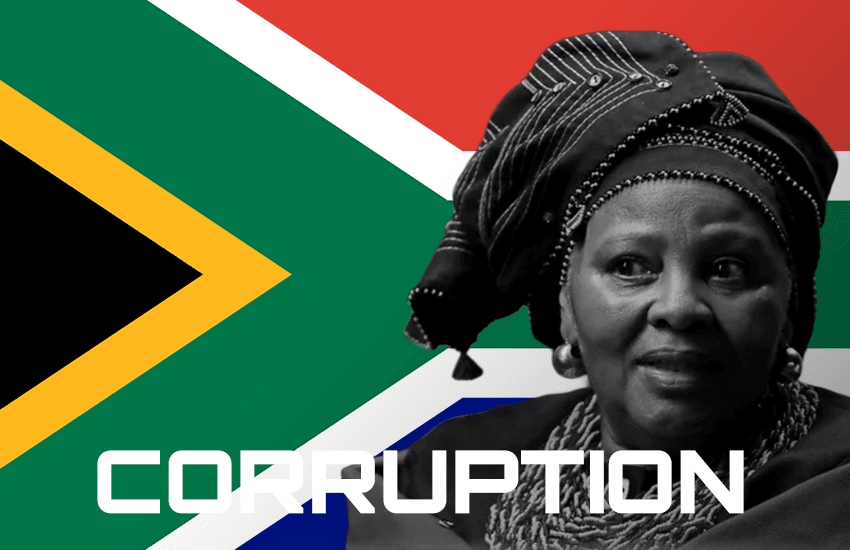
Former Speaker of South Africa’s National Assembly and ex–Minister of Defence, Nosiviwe Mapisa-Nqakula, is facing charges of alleged corruption and money laundering linked to military logistics contracts. Now before the High Court of Pretoria, the case has crystallized criticism of elite probity and—beyond an individual dossier—exposed persistent weaknesses in public procurement within the defense sector.
Established facts
Following a search of her residence in March 2024, Mapisa-Nqakula lost an urgent application in early April seeking to block her arrest. She resigned the following day as Speaker of the National Assembly, then presented herself to police in Pretoria, where she was formally charged. The court granted her bail of ZAR 50,000 and ordered the surrender of her passport. Prosecutors have brought 13 counts in total—12 of corruption and one of money laundering—alleging “undue payments” and cash flows received between 2016 and 2019, when she headed the Ministry of Defence. She denies any wrongdoing and characterizes the case as “political.” In her resignation letter, she stated: “My resignation is in no way an admission of guilt.”
The alleged mechanism
At the center of the case is a cluster of logistics contracts for the South African National Defence Force (SANDF) tied to external operations, notably the backloading (repatriation) of equipment from the Democratic Republic of the Congo. According to the indictment and affidavits on file, Mapisa-Nqakula allegedly solicited up to ZAR 4.5 million from a businesswoman in the sector and received approximately ZAR 2.1–2.3 million in cash across at least eleven payments. An additional request for USD 105,000 was reportedly not honored. These payments, prosecutors contend, coincided with the award of a contract exceeding ZAR 100 million for the transport of strategic equipment. The details that have emerged point to the procedural banality of “small-deal” corruption, where cash and gratuities are concealed behind highly technical logistics services.
Context and systemic failures
South Africa’s defense sector combines multiple vulnerabilities: complex requirements (transport of sensitive equipment, external theaters), pronounced information asymmetries between public buyers and contractors, high logistics margins, and procedures that at times derogate from ordinary procurement law on security grounds. This mix heightens risks of collusion and overbilling. Year after year, reports by the Auditor-General have flagged elevated levels of irregular expenditure at the Ministry of Defence, accounting for a substantial share of national totals. Such warnings do not, in themselves, establish criminal liability; they do, however, document an environment of insufficient internal control, where safeguards—flow traceability, strict separation of duties, legal oversight of contracts—are not always commensurate with the risks.
Institutional architecture under strain
The Mapisa-Nqakula affair also underscores the fragility of parliamentary governance. Having the first chamber led by an officeholder subject to a search created an objective conflict of interest: the guardian of institutional integrity was simultaneously at the center of a criminal investigation. The swift resignation averted an open crisis, but not without friction. The Speaker’s office initially denied the allegations, and litigation sought to slow investigators’ actions. Later, a request for the Ministry of Defence to fund her legal defense prompted a rebuke over protocol and the use of public funds. On the prosecutorial side, coordination has also drawn scrutiny: the elevation of a sector executive to state witness status (under Section 204) after a related file temporarily faltered raised questions about coherence in charging strategies. In public-procurement cases, evidentiary robustness often turns on witness quality and alignment across files—this is not a minor point.
Actors and interests
The prosecution aims to establish a pay-to-play scheme—payments in exchange for facilitation in awarding or executing logistics contracts. Strategically, the objective is twofold: deterrence and a visible signal that impunity is ending.
The defense advances a politicization thesis—opportunistic prosecutions ahead of electoral milestones and a skewed reading of private transactions—leaning on testimonial uncertainty, discrepancies in amounts, and the absence of direct banking trails for some cash handovers.
Military contractors seek to preserve the legitimacy of sensitive contracts often concluded under operational urgency, arguing compliance with specifications and the reality of costs (secured convoys, complex routes, handling mission-critical equipment).
Political institutions are balancing due process with demands for exemplarity. The governing majority backed the resignation without prejudging guilt; the opposition applied pressure in the name of institutional credibility.
Political context
The indictment comes amid heightened public distrust. Opinion surveys conducted in 2024 indicate that a large majority of South Africans believe “most” MPs are involved in corruption. At the polls, the African National Congress (ANC) lost its majority for the first time since 1994, ushering in a delicate coalition phase. It would be excessive to attribute that outcome to a single case; yet the accumulation of scandals weighs on perceptions of a state capable of self-correction. In this climate, the authorities’ ability to deliver a swift, fair, and well-substantiated trial becomes a credibility test extending well beyond the former Speaker’s personal fate.
Impact on institutions and trust
In the short term, the case has already produced a salutary effect: apparent adherence to accountability, reflected in the resignation of a senior figure and judicial handling without visible favoritism. Over the medium term, the stakes are systemic. If logistics contracts are shown to have been captured by influence networks, prevention must be strengthened: open tender publicity, transparency around amendments and “logistics repairs,” independent ex-post audits, a strict ban on cash payments between market-linked parties, and swift sanctions for breaches. The jurisprudence emerging from this trial will shape public-sector conduct for years.
A complex case, a demand for restraint
The severity of the charges does not pre-judge guilt. The defense will contest the existence of quid pro quos, the former minister’s personal imputability, and the reliability of witnesses who may be bargaining over their own exposure. Conversely, prosecutors will seek to assemble a probative chain—financial flows, decision timelines, communications, converging testimony—robust enough to clear the reasonable-doubt threshold. A scandal-weary public calls for swift verdicts; speed, however, cannot substitute for rigor. The court must arbitrate competing narratives in a technically complex contractual universe rife with gray zones.
Conclusion
The indictment of Nosiviwe Mapisa-Nqakula is more than a personal case: it tests the South African state’s capacity to discipline procurement chains in a critical sector and to uphold exemplarity at the top. While the presumption of innocence prevails, the file already serves as a revealer—of parliamentary governance vulnerable to conflicts of interest, of public procurement exposed to side arrangements, and of a society acutely attentive to integrity signals. The most durable response—beyond any single verdict—will lie in concrete procedural reforms and a steady justice system that, without excess, sanctions failures and safeguards institutions.


 Togo
Togo
 FR
FR
 EN
EN