
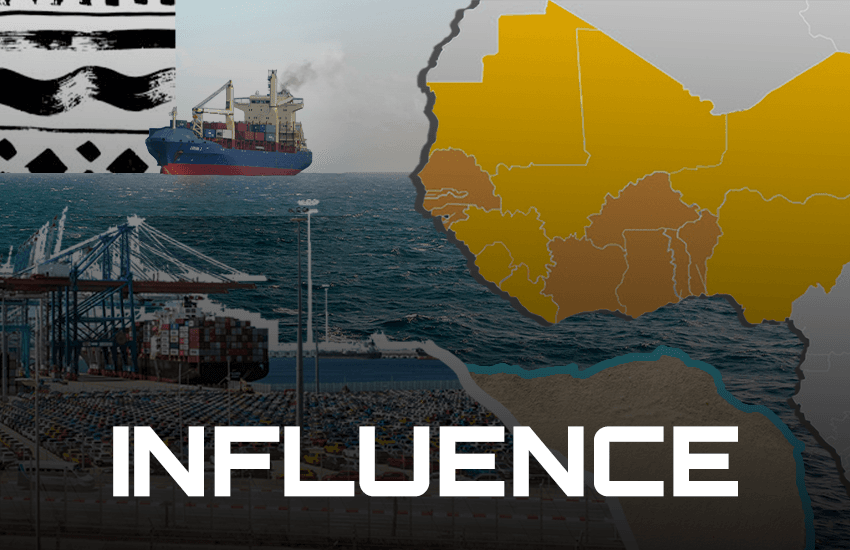
NGO Complaint Reignites Debate Over the Bolloré Group’s Influence
A coalition of African and French organizations has filed a complaint with France’s Parquet National Financier (PNF) targeting the Bolloré Group and several of its executives. At the center of the case are the ways port concessions were acquired and operated in West Africa, alleged corruption, and—more broadly—purported methods of political influence. The complainants are seeking restitution of profits they consider unduly obtained, invoking a French mechanism for returning confiscated assets adopted in 2021. Beyond the courtroom, the dispute raises a wider question: the economic sovereignty of port states and international perceptions of governance in Africa.
The core dispute: contested concessions and an alleged “influence system.”
The NGOs argue that, over many years, the group built a dominant position over strategic terminals—from Lomé to Conakry—by combining logistics expertise, political relationships, and communications. Their complaint describes a “system” in which the award and retention of concessions allegedly relied on unlawful practices. The stated objective is the “restitution of billions of euros” to “states and populations deemed victims,” on the grounds that part of the gains flowed from tainted contracts. The thesis is summed up in stark terms: Bolloré is said to be “at the heart of an African corruption system.”
In this narrative, political communications play a pivotal role. Election campaigns are alleged to have benefited from preferential, underpriced services provided by Havas, creating political debts later “settled” through the granting or extension of port concessions. One NGO claims Havas “underbilled its political advisory services”; in return, “the port concession” was secured. These assertions echo a long-running criminal file concerning Togo and Guinea, where magistrates and investigators sought to establish links between political consulting and logistics profits.
Judicial background: settlements, referrals sought, and related litigation.
In 2021, Bolloré entered into a convention judiciaire d’intérêt public (CJIP) with the PNF, paying a €12 million fine—closing proceedings against the corporate entity without a criminal conviction. A parallel attempt at a comparution sur reconnaissance préalable de culpabilité (CRPC) involving Vincent Bolloré and two executives was rejected by the court, leaving open the possibility of trial. In 2024, the PNF sought Vincent Bolloré’s referral to the criminal court for “bribery of a foreign public official” and “complicity in breach of trust” in the Togo matter; the final decision rests with the investigating judge.
The NGOs’ new action does not start from scratch. It aggregates previously known elements and connects them to a restitution claim grounded in the 2021 French law. Legally, its reach will depend on the PNF’s preliminary assessment, which could lead to the opening of an investigation.
The group’s defense: firm denial and warning against conflation.
The group and its counsel reject the allegations. Defense lawyers characterize the case as “legally empty and factually unfounded,” stressing that no final ruling has established that the concessions were illegally obtained. They underscore that a CJIP is not a conviction and point to the company’s cooperation with authorities. On the merits, the group highlights heavy investment, gains in port productivity, and skilled jobs. The underlying argument is clear: conflating business relationships, institutional communications, and corruption is an unwarranted shortcut.
That said, materials filed by investigators in the Togo/Guinea strands included seized evidence describing—according to a 2021 order—the promise of “offers,” “gifts,” or “advantages” prohibited under the offense of bribery of a foreign public official.
An African logistics empire sold—yet an enduring legacy.
Historically, Bolloré Africa Logistics (BAL) assembled a network of port and rail concessions across West and Central Africa, building on the SDV/Saga/Socopao legacy and partnerships with port authorities. In 2022, the group sold 100% of BAL to MSC for an enterprise value of €5.7 billion; the new entity, Africa Global Logistics (AGL), now operates 17 container terminals and claims 22 port and rail concessions on the continent. The sale does not erase the past: complainants argue that the price embeds gains derived from contested practices—hence their restitution strategy. The group counters that the valuation reflects strong assets and growth prospects.
Economic stakes: when logistics shapes sovereignty.
In Africa, roughly 80% of international trade moves by sea; port connectivity determines shipping costs, export competitiveness, and supply-chain security. In 2021, the continent accounted for about 6.9% of loaded cargoes and 5% of unloaded volumes in global maritime trade—modest shares, but rising. Control of ports is therefore a macroeconomic lever. For states, the question is not only who operates, but under what terms: revenue sharing, investment commitments, skills transfer, and contractual transparency.
Litigation carries costs. In Guinea, the controversial reallocation of the Conakry container terminal triggered more than a decade of arbitral and judicial proceedings; a competitor claimed losses in the tens of millions of euros, and rulings at various stages ordered payments that were later partially overturned elsewhere. Beyond the sums, contractual uncertainty weighs on attractiveness and delays upgrades critical to economies.
Judicial reach and international perception.
Should the NGOs’ complaint lead to investigations into new facts or to seizures aimed at restitution, it would constitute a full-scale test of France’s 2021 “illicit assets” framework and of judicial cooperation with affected countries. Reputationally, the case revives a recurring critique: the notion of “logistics dependence” of several countries on foreign operators, viewed by some as a vector of influence. Conversely, other governments and shippers see private concessions as a way to accelerate capital-intensive infrastructure upgrades—provided oversight is rigorous.
The affair also reshuffles a sensitive Franco-African debate: can France simultaneously promote anti-corruption, safeguard investment legal certainty, and avoid accusations of undue influence by its firms? The answer will hinge less on declarations than on the quality of evidence and the conduct of public hearings.
Conclusion
The complaint does not predetermine the law; it reopens a file where contractual engineering, political communications, and port geoeconomics intersect. Three takeaways stand out. First, French justice now has tools to align prosecution with restitution for populations—but activation requires established facts and solid legal qualifications. Second, the history of concessions shows that a port is more than a quay: it is a sovereignty rent that demands transparent clauses, robust tenders, and safeguards against conflicts of interest. Finally, Bolloré’s defense and the NGOs’ demands converge—paradoxically—on common ground: a public, evidence-based examination. It is there, and only there, that the line between legitimate influence and corruption will be drawn.

 Togo
Togo
 Ghana
Ghana
 FR
FR
 EN
EN