
 Morocco
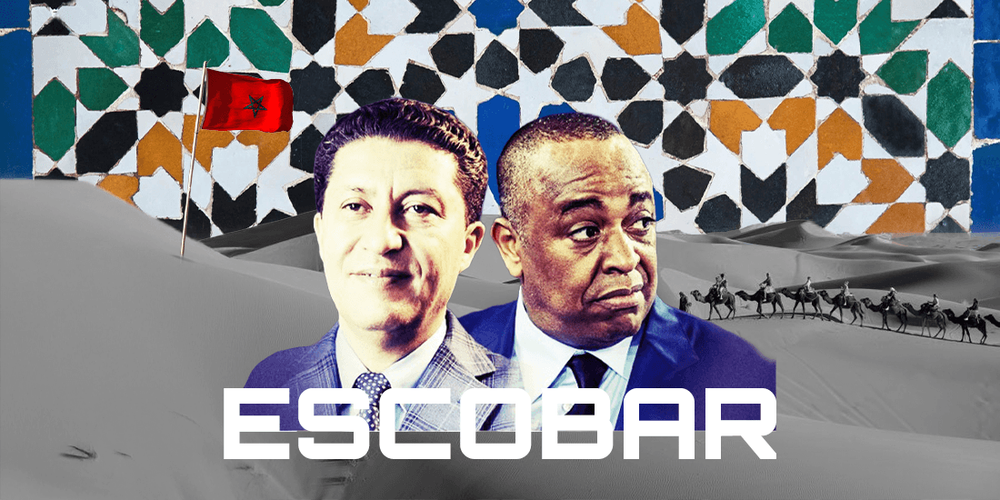
In Morocco, a judicial file is testing institutions, the rule of law, and the country’s international standing: the so-called “Sahara Escobar” case, centered on El Hadj Ahmed Ben Brahim, a Malian national and a major figure in Sahelian–Maghrebi drug trafficking. Beyond the moniker lies an allegedly sprawling network intertwining trans-Saharan routes, suspected complicity within state apparatuses, and high-profile political actors. Opened in May 2024 in Casablanca, the trial continues into 2025, and its hearings have already yielded rare factual material illuminating judicial, financial, and diplomatic stakes.
1) The core of the case: a transnational network and high-profile defendants
The central question is stark: can a drug baron already in custody, through his statements and the evidence seized by investigators, establish the existence of an organized system that for years moved tonnes of cannabis resin, laundered proceeds, and corrupted relays at borders? The investigation and ensuing trial have brought to the fore two prominent political figures—Saïd Naciri (former president of Casablanca’s prefectural council and former president of Wydad AC) and Abdenbi/Abdennabi Bioui (former president of the Oriental Regional Council)—charged with serious offenses: international drug trafficking, corruption, forgery and use of forged documents, money laundering, among others. All contest the charges; the presumption of innocence applies. In this procedure, Ben Brahim—already convicted in Morocco in an earlier case—is both civil party and complainant; his revelations, alongside witness testimony, feed the prosecution without relieving it of the burden of proof.
2) Established facts and a robust chronology
Several factual elements are now documented. First, the profile of the principal figure: arrested in 2019 at Mohammed V Airport, Ben Brahim is serving a prior sentence and has been linked by Moroccan courts to large-scale trafficking. Authorities and international media have recalled a record seizure of cannabis resin in 2015 associated with his name, while earlier episodes already place him at the center of transatlantic and Sahelian flows.
Second, the investigation conducted by the Brigade Nationale de la Police Judiciaire (BNPJ) from 2023 led to a sweeping dragnet: an initial wave of at least 25 suspects, later expanded to 28 defendants as the inquiry progressed. Two senior police commissioners were suspended as a precaution pending the outcome. Public hearings have detailed wiretaps, financial flows, and disputed real-estate transactions. At the bar, Bioui denied any link to trafficking; Naciri likewise rejected the allegations wholesale, vowing to “refute” the charges. These public denials frame the defense strategy.
3) Route mechanics: the eastern border, Saharan roads, and the Iberian corridor
Understanding the trafficking architecture requires combining the Moroccan ground picture with the Euro-Maghrebi context. Domestically, hearings described a modus operandi in the Oriental region along the Moroccan-Algerian border: identified crossing “points,” technical safeguards (cameras) allegedly bypassed, tariffed payments per “bundle” to complicit agents, and local “small hands” mobilized at night. The cumulative volume cited by the prosecution—over 200 tonnes over the period—sets the scale.
Regionally, accounts converge: part of the flow transits via the Sahel toward Algeria and Libya, while another moves by sea to Moroccan coasts before heading to Europe. At the outlet, Spain has long remained the primary entry corridor for Moroccan resin into the European market. This old yet adaptable geography explains the resilience of the networks and the difficulty of fully dismantling them.
4) Actors, interests, and strategies
Four clusters emerge.
The criminal core: around Ben Brahim, prosecutors describe a flexible network combining Saharan logistics, local relays, and opaque financial circuits—aimed at controlling the value chain from source to exit points.
Border and security relays: hearings mention military personnel stationed at the border, with allegations of diverting surveillance systems for remuneration; two police officers were suspended during proceedings. If substantiated, these claims would reveal exploitable institutional breaches.
Political figures: the implication of figures from the Party of Authenticity and Modernity (PAM) triggered administrative responses (replacement procedures at the helm of local authorities). Defense strategies hinge on challenging the credibility of complainants, disputing incriminated financial flows, and denouncing “trial by insinuation.”
Judicial and customs institutions: prosecutors and the criminal chamber are conducting a marathon trial, while the Administration des Douanes et Impôts Indirects (ADII) has joined as a civil party, claiming colossal sums in penalties—signaling the state’s intent to strike financially as well as criminally.
5) Stakes for citizens, institutions, and the international arena
For citizens, the case crystallizes two demands: equality before the law and the clean-up of border zones where informal economies thrive for lack of alternatives. The trial’s credibility will turn on evidentiary quality (wiretaps, banking traceability, expert reports) and decisional coherence.
For institutions, the test is systemic: what do these allegations reveal about internal controls (police, military, customs), local governance (procurement, asset oversight), and the capacity to track cross-border flows? Debates over party roles—including internal discipline—are a measure of political maturity.
Internationally, the file sits at a crossroads. On one hand, Morocco has legalized cannabis cultivation for medical and industrial uses and is structuring a legal value chain in the Rif; on the other, a persistent transnational black market—fueled by European demand—sustains ambivalence. European partners, concerned about resin flows via Spain, are watching closely; Euro-Maghrebi police and judicial cooperation is central.
6) Justice, money, and diplomacy: a triple contest
Judicial: the burden of proof rests with the prosecution, and proceedings already reflect high demands—lengthy hearings, confrontations, exploitation of intercepts, analysis of banking records, and scrutiny of real-estate deals. Delays, adjournments, and “trials within the trial” (alleged defamation, contested witnesses) illustrate a voluminous but necessary process to avoid fragile outcomes on appeal.
Financial: the disputed flows will undergo strict legal sorting—separating legitimate personal resources from criminal proceeds, mapping value chains, and identifying any nominee holders. ADII’s claim—running into several billion dirhams—signals deterrence by cost.
Diplomatic: amid strained relations with Algiers, the “Sahara Escobar” case feeds antagonistic narratives: Morocco presents itself as a rule-of-law state cleansing its system; Algeria frames it rhetorically as evidence of “flooding” across borders. The judicial truth, when established, will resonate beyond the courtroom—affecting border cooperation, European partners’ trust, and the attractiveness of an emerging legal industry.
Conclusion
At this stage, the trial has not reached a verdict. It has, however, exposed rare material on trafficking methods, institutional porosity, and the entanglement of money, local power, and criminal economy. The challenge for Moroccan justice is to deliver a decision that is legally robust, intelligible, and exemplary; for the state, to convert lessons into policy—stronger internal controls, economic rebalancing in border regions, financial traceability, and enhanced international cooperation. Failing that, the case would continue to fuel a costly doubt: that of a country modernizing a legal sector while struggling to drain a transnational black market.
 FR
FR
 EN
EN